Author:

Yuliia Didenko
Specialists from the Voices of Children Charitable Foundation, Nataliia Sosnovenko and Alla Perfetska, held a meeting with case managers and psychologists from partner organizations involved in supporting children who have returned from temporarily occupied territories of Ukraine or the Russian Federation. The meeting took place within the framework of the presidential initiative Bring Kids Back UA.
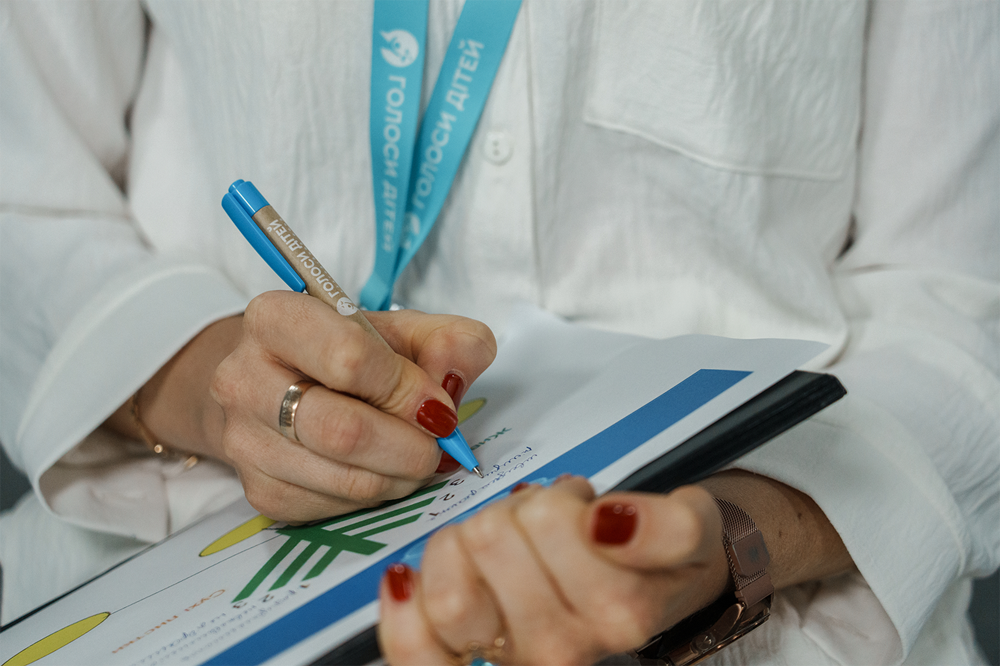
More than 30 participants learned more about the Foundation’s methods and experience of working with children who have returned from Russian occupation or who have been deported. The session was conducted in a format similar to professional supervision, where experienced specialists support colleagues and help them find answers to complex professional questions.
The request for the meeting came from the partners themselves. They wanted to better understand how Voices of Children works with children who have such difficult experiences and what approaches are used by the Foundation’s psychologists. Since 2023, the Foundation has been supporting returned children and has accumulated substantial experience and insight into the challenges faced both by the children and the professionals supporting them.
The request for the meeting came from the partners themselves. They wanted to better understand how Voices of Children works with children who have such difficult experiences and what approaches are used by the Foundation’s psychologists. Since 2023, the Foundation has been supporting returned children and has accumulated substantial experience and insight into the challenges faced both by the children and the professionals supporting them.
Reintegration: From Methodology to Practical Guidance
During the meeting, Nataliia Sosnovenko and Alla Perfetska presented the approaches that underpin the Foundation’s work. Nataliia focused on the psychological component: how to work with trauma, how to understand children’s reactions, and which tools can be used to prevent harm. Alla shared advocacy-related expertise: how to protect children’s rights, how to create a safe environment for their return, and why reintegration requires joint efforts from both the state and civil society.
When working with children who have returned from temporarily occupied territories or from the Russian Federation, it is important to remember that they have already experienced situations in which control was taken away from them. They often feel deep mistrust toward the world and people. Our task is to restore their sense of choice and safety. A trauma-informed approach is about care without coercion and about support. It is essential that children have the opportunity to choose a psychologist when they feel ready for it,
After prolonged exposure to a different informational and social environment, a child may demonstrate avoidance or protest as a form of self-protection. The participants therefore discussed the key challenges children face after returning: loss of a sense of safety, complex emotions related to coming back, language, symbols, belonging, and trust.
Special attention was given to the core principle of reintegration—no pressure. Children need safe conditions for adaptation. When they feel supported, respected, and have the right to be themselves, recovery happens gradually and naturally.
Special attention was given to the core principle of reintegration—no pressure. Children need safe conditions for adaptation. When they feel supported, respected, and have the right to be themselves, recovery happens gradually and naturally.
We view reintegration not only as work with children who have returned from occupation or deportation. In reality, all children in Ukraine are living through the experience of war and require reintegration efforts. We need to rethink the very concept of ‘reintegration.’ Children leaving institutional care facilities, internally displaced children, and those returning from abroad also need adult support. That is why, when developing our methodological and position papers, we rely on a broader understanding of reintegration as a comprehensive process that requires joint action by the state and civil society,
Experience That Shapes Standards
The Voices of Children Charitable Foundation has its own Center for Psychological Expertise and Methodology. Based on its work with returned children, the Foundation developed a Concept that defines principles, ethical standards, and organizational approaches. The document outlines procedures for psychological support, the provision of psychosocial services, regulatory frameworks, and ethical principles for working with children who have experienced occupation or deportation.
Working with children who have returned from temporarily occupied territories or from the Russian Federation requires a deep understanding of what the child has lived through. It is critically important how teachers speak to the child, how classmates respond, and whether there is a space where the child can be themselves without fear of judgment. Creating such an environment was a central focus of the meeting with Bring Kids Back UA specialists.
The project “Strengthening Comprehensive Reintegration Support for Returning Children” is implemented within the reintegration component of the President of Ukraine’s Bring Kids Back UA initiative, in partnership with the Coordination Center for the Development of Family-Based Upbringing and Child Care. It is carried out by a consortium of organizations: CSO Ukrainian Network for Children’s Rights, ICF SOS Children’s Villages Ukraine, ICF Ukrainian Foundation for Public Health, NGO League of Social Workers of Ukraine, CF Save Ukraine, and CF Voices of Children, with the support of UNICEF and funding from Canada, Norway, and the United States.
Working with children who have returned from temporarily occupied territories or from the Russian Federation requires a deep understanding of what the child has lived through. It is critically important how teachers speak to the child, how classmates respond, and whether there is a space where the child can be themselves without fear of judgment. Creating such an environment was a central focus of the meeting with Bring Kids Back UA specialists.
The project “Strengthening Comprehensive Reintegration Support for Returning Children” is implemented within the reintegration component of the President of Ukraine’s Bring Kids Back UA initiative, in partnership with the Coordination Center for the Development of Family-Based Upbringing and Child Care. It is carried out by a consortium of organizations: CSO Ukrainian Network for Children’s Rights, ICF SOS Children’s Villages Ukraine, ICF Ukrainian Foundation for Public Health, NGO League of Social Workers of Ukraine, CF Save Ukraine, and CF Voices of Children, with the support of UNICEF and funding from Canada, Norway, and the United States.
Share:

