Concept for working with children who have been deported or forcefully displaced to Russia (English)
The Voices of Children team, in collaboration with the public association "Ukrainian Child Rights Network" and the NGO "Regional Center for Human Rights," has developed a
Concept for working with children who have been deported or forcefully displaced to Russia.
The document outlines the procedure for psychological assistance, legal regulation, and ethical principles for supporting minors who have experienced deportation.
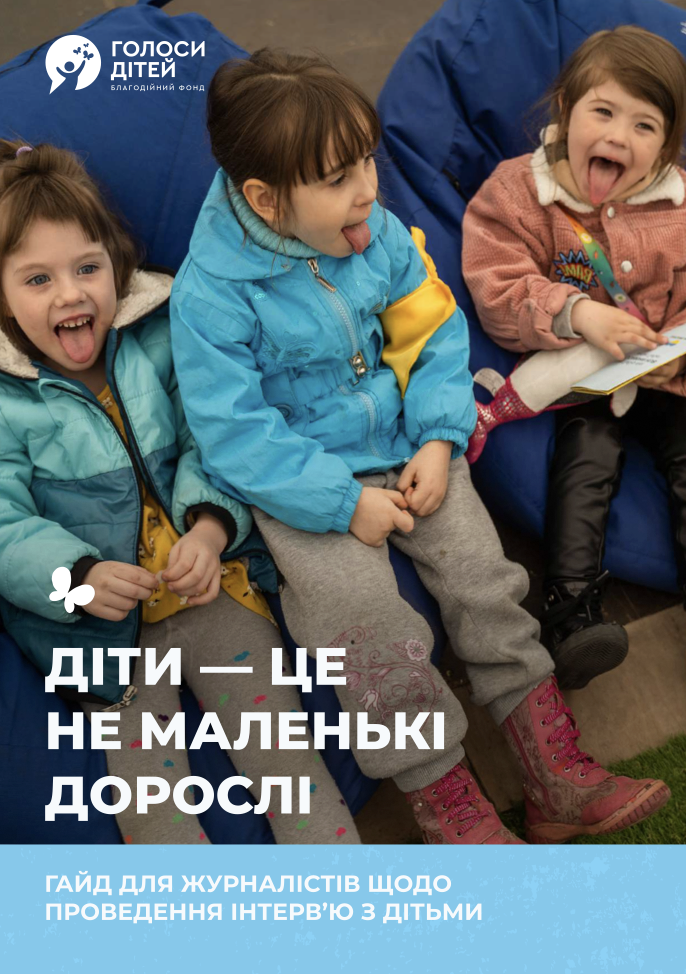
Guide for journalists on the ethical conduct of interviews with children who have experienced difficult situations (English)
It is important to us that the communication between journalists and children is ethical and does not cause harm. Protecting children from the risk of retraumatization should take priority over obtaining emotional footage.
This guide contains a set of best practices for journalists to help conduct ethical interviews with children and appropriately present information about children's conditions, trauma, and crimes committed against them.
It is important to us that the communication between journalists and children is ethical and does not cause harm. Protecting children from the risk of retraumatization should take priority over obtaining emotional footage.
This guide contains a set of best practices for journalists to help conduct ethical interviews with children and appropriately present information about children's conditions, trauma, and crimes committed against them.
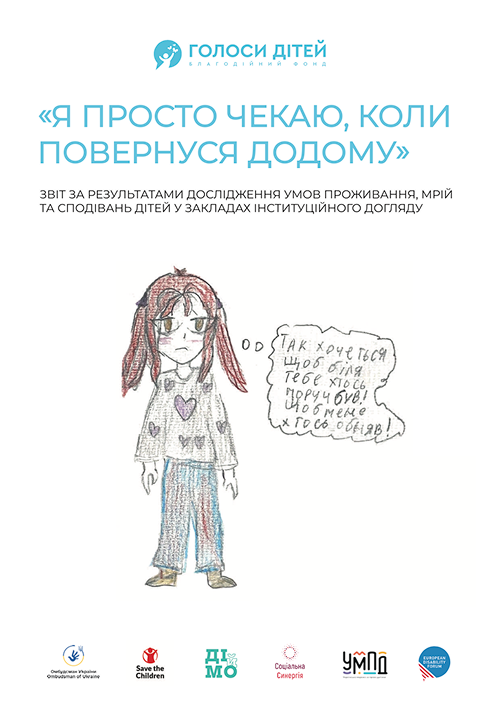
Report on the findings of the study on the living conditions, dreams, and aspirations of children in institutional care facilities (English)
The study was conducted by the international organization Save the Children and the charitable foundation Voices of Children, in cooperation with the Ukrainian Child Rights Network, the European Disability Forum, the NGO Social Synergy, the Children and Youth Office "Diymo" under the Ministry of Social Policy of Ukraine, and the Office of the Ukrainian Parliament Commissioner for Human Rights.
Researchers interviewed more than 500 children and young people in over twenty residential institutions across Ukraine.
The document also contains a set of clear recommendations for the government, local authorities, and civil society organizations within the framework of the deinstitutionalization reform — the transition from institutional to family-based care for children currently raised in specialized institutions.
Researchers interviewed more than 500 children and young people in over twenty residential institutions across Ukraine.
The document also contains a set of clear recommendations for the government, local authorities, and civil society organizations within the framework of the deinstitutionalization reform — the transition from institutional to family-based care for children currently raised in specialized institutions.
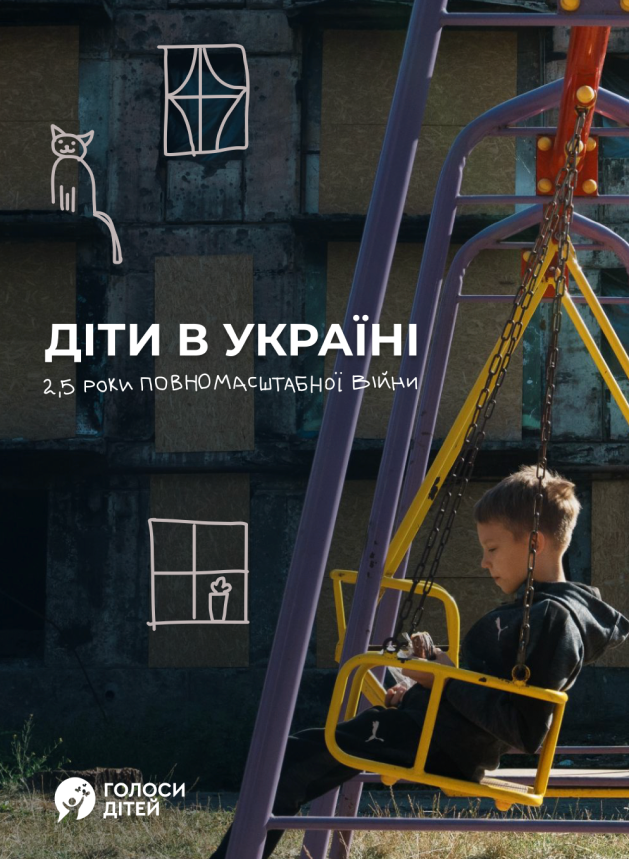
Report on war crimes against minors during 2.5 years of the full-scale war (English)
The "Voices of Children" Charitable Foundation has prepared a report on Russia's war crimes against Ukrainian children over the course of 2.5 years of full-scale war. The methodology is based on the analysis of statistics, data from official sources and media materials, as well as in-depth interviews with parents, children, and experts.
The report also separately examines the issue of the deportation of Ukrainian children and potential measures for their rehabilitation upon return. In-depth interviews were conducted with parents and children who have experienced occupation or forced deportation to Russia, as well as with experts from governmental and non-governmental organizations working on the repatriation of children, providing case management services to these families, and assisting with their reintegration upon return to Ukraine.
The report also separately examines the issue of the deportation of Ukrainian children and potential measures for their rehabilitation upon return. In-depth interviews were conducted with parents and children who have experienced occupation or forced deportation to Russia, as well as with experts from governmental and non-governmental organizations working on the repatriation of children, providing case management services to these families, and assisting with their reintegration upon return to Ukraine.
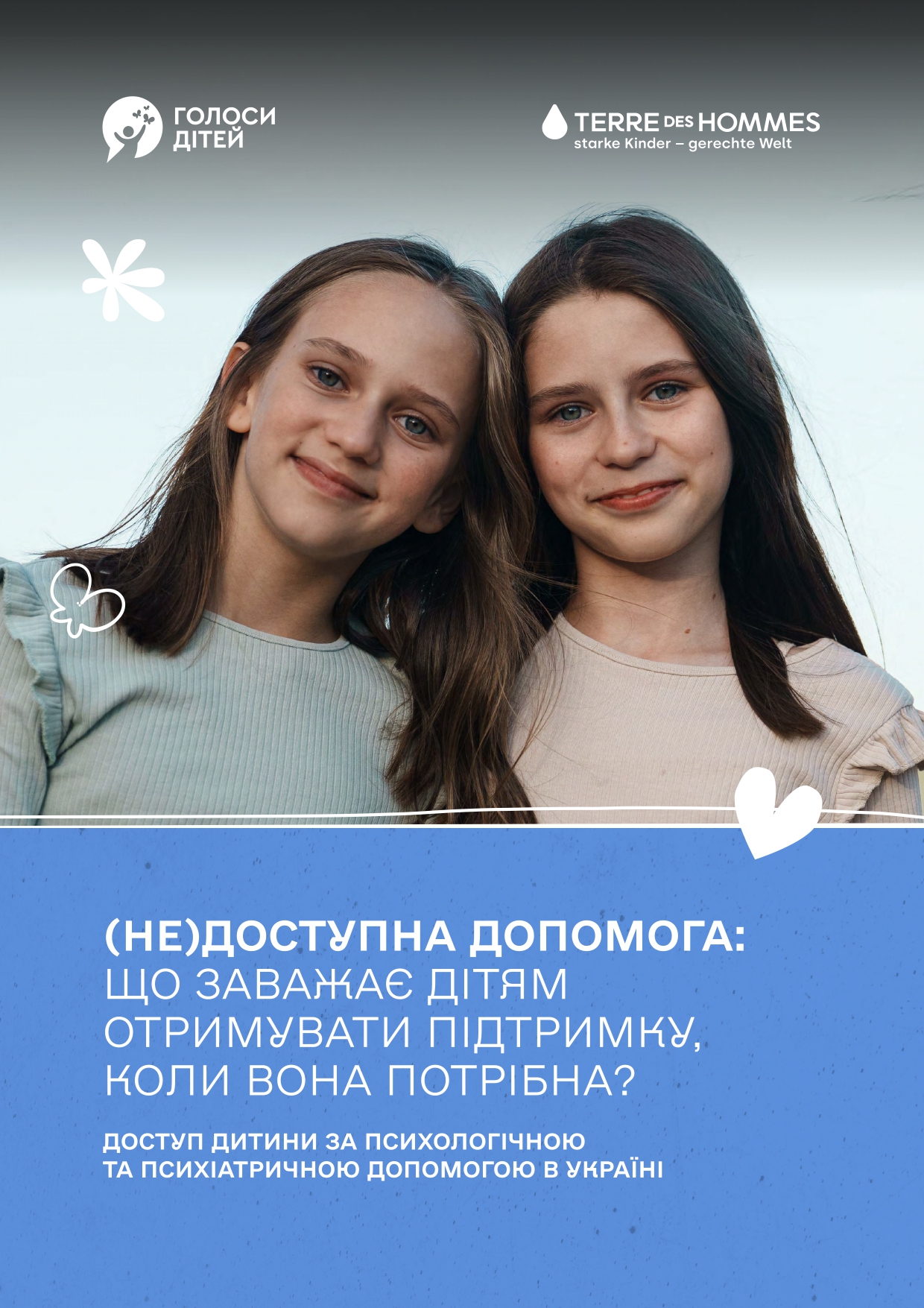
(IN)Accessible Care: What Prevents Children from Receiving Support When They Need It?
The Voices of Children Foundation, together with Terre des Hommes, has carried out a study titled "(In)accessible Help: What Stops Children from Getting Support When They Need It?" In it, we examine how access to psychological and psychiatric care for children is structured in Ukraine — particularly in situations where adolescents under 14 need support but cannot turn to a psychologist or psychiatrist on their own without the consent of a parent or other legal representative. Obtaining such consent is not always possible: whether because adults are unaware of the need, hold biased views, or because of the difficult circumstances a family may be facing.
We analysed how children's access to psychological care is regulated under international law and Ukrainian legislation, and examined the experience of other countries — from EU member states to the United Kingdom, Canada, the United States, and Norway. We looked specifically at where children can seek help independently depending on their age, and where decisions are made through an individual assessment of the child's maturity. Drawing on this comparison, we compiled recommendations on how to make psychological and psychiatric care more accessible for Ukrainian children and adolescents, while safeguarding their best interests.
We analysed how children's access to psychological care is regulated under international law and Ukrainian legislation, and examined the experience of other countries — from EU member states to the United Kingdom, Canada, the United States, and Norway. We looked specifically at where children can seek help independently depending on their age, and where decisions are made through an individual assessment of the child's maturity. Drawing on this comparison, we compiled recommendations on how to make psychological and psychiatric care more accessible for Ukrainian children and adolescents, while safeguarding their best interests.
Модель психологічної та психосоціальної реінтеграції дитини в Україні
«Голоси дітей» представляють «Модель психологічної та психосоціальної реінтеграції дитини в Україні» — підхід до роботи з дітьми, які пережили травмівні події, зокрема депортацію або примусове переміщення. Модель охоплює весь шлях дитини: від перших тижнів у центрі тимчасового перебування до довготривалої підтримки вже після повернення в громаду.
Практичний документ для тих, хто працює з дітьми після пережитого на війні — депортації та примусового переміщення, окупації, втрати близьких, вимушеного переїзду. Він стане у пригоді кейс-менеджерам, психологам, освітянам, юристам, а також громадам і органам влади. Документ показує, хто за що відповідає на кожному кроці супроводу дитини, на яких принципах будується реінтеграція і що мають уміти дорослі поруч; окремо зібрані рекомендації для законодавчої та виконавчої влади. Основа документа — реальні випадки з роботи фонду та міжнародний досвід. Дослідження можна поширювати з посиланням на джерело.
Практичний документ для тих, хто працює з дітьми після пережитого на війні — депортації та примусового переміщення, окупації, втрати близьких, вимушеного переїзду. Він стане у пригоді кейс-менеджерам, психологам, освітянам, юристам, а також громадам і органам влади. Документ показує, хто за що відповідає на кожному кроці супроводу дитини, на яких принципах будується реінтеграція і що мають уміти дорослі поруч; окремо зібрані рекомендації для законодавчої та виконавчої влади. Основа документа — реальні випадки з роботи фонду та міжнародний досвід. Дослідження можна поширювати з посиланням на джерело.
Повернути дитинство: психологічна підтримка дітей на шляху реінтеграції
У дослідженні «Повернути дитинство: психологічна підтримка дітей на шляху реінтеграції» команда «Голосів дітей» розбирає, що допомагає дитині після травмівного досвіду війни знову відчути безпеку, довіряти дорослим і бути частиною життя громади.
Реінтеграція дитини не завершується поверненням додому — найскладніше починається вже потім, у школі, у стосунках із рідними, серед однолітків. Щоб показати, що відбувається на цьому етапі, команда «Голосів дітей» провела 45 анкетувань і 13 глибинних інтерв'ю з батьками та опікунами дітей, які повернулися з тимчасово окупованих територій або з росії, і зіставила їхній досвід з аналізом міжнародних практик реінтеграції. Зібрані висновки фонд оформив як конкретні рекомендації — для педагогів, психологів, соціальних працівників і родин, а також для тих, хто формує політики та програми підтримки таких дітей.
Реінтеграція дитини не завершується поверненням додому — найскладніше починається вже потім, у школі, у стосунках із рідними, серед однолітків. Щоб показати, що відбувається на цьому етапі, команда «Голосів дітей» провела 45 анкетувань і 13 глибинних інтерв'ю з батьками та опікунами дітей, які повернулися з тимчасово окупованих територій або з росії, і зіставила їхній досвід з аналізом міжнародних практик реінтеграції. Зібрані висновки фонд оформив як конкретні рекомендації — для педагогів, психологів, соціальних працівників і родин, а також для тих, хто формує політики та програми підтримки таких дітей.