Author:

Yuliia Didenko
Canadian actress and director of Ukrainian descent, best known for her roles as Lagertha in Vikings and Hannah Burley in Bones, came to Kyiv ahead of Ukraine’s Independence Day. While here, she visited our center and met children, including those who had lived through Russian occupation and those forced to leave their homes because of the war. The night before the visit was a difficult one: air raid sirens woke the team in the middle of the night. Katheryn recalled that her “heart rate was pounding, coming out of her chest.”
Over the course of 24 hours, she went down to the shelter nine times. Later, speaking to the children, she said, “It’s hard to imagine what you’re going through.” And it truly is horrifying when this is how you live for months and years.
Over the course of 24 hours, she went down to the shelter nine times. Later, speaking to the children, she said, “It’s hard to imagine what you’re going through.” And it truly is horrifying when this is how you live for months and years.
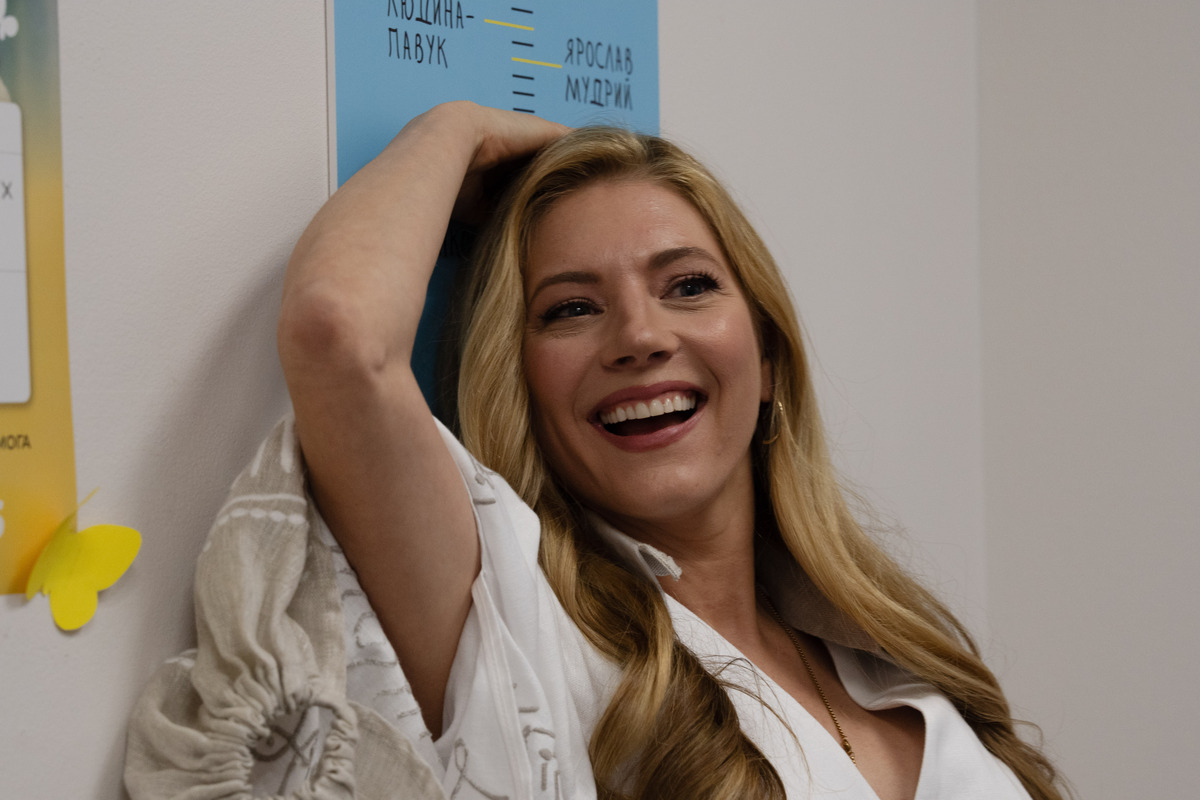
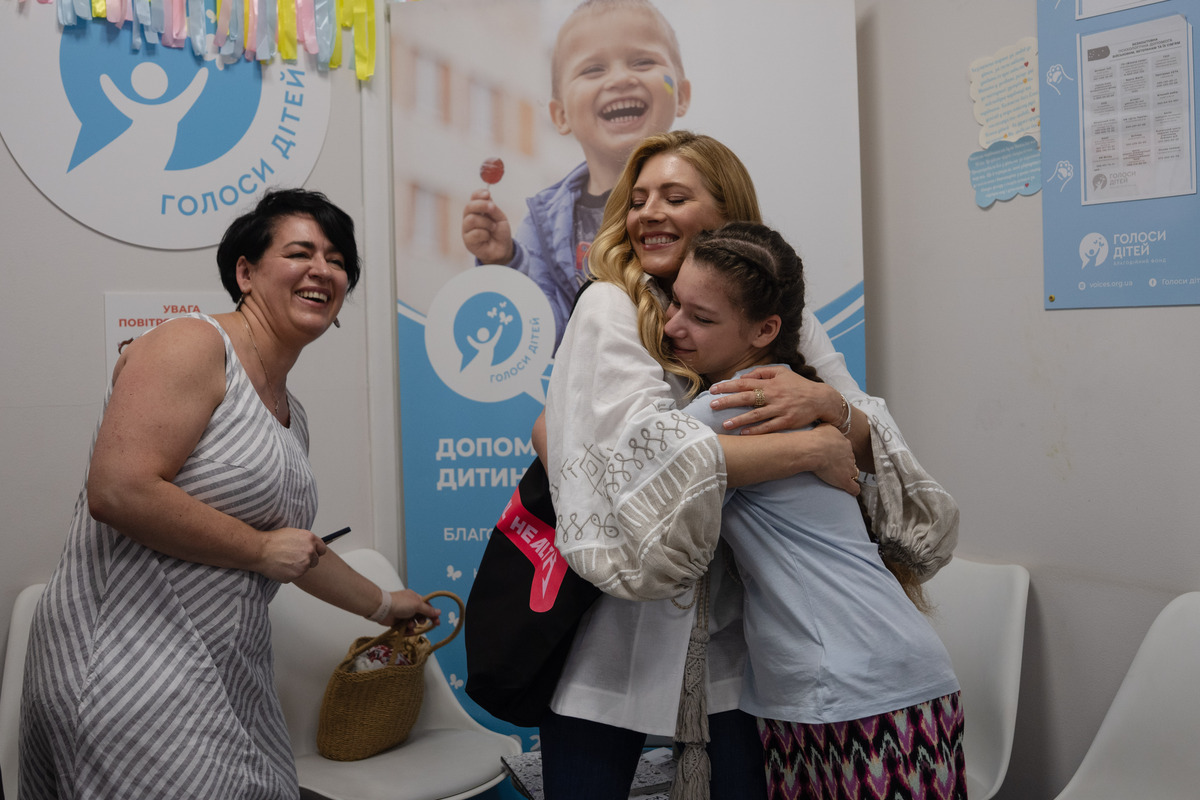
At the Voices of Children center in Kyiv, there is an unusual blue height chart on the wall where children measure how tall they are. Lesia Ukrainka and Taras Shevchenko share the chart with Spider-Man, Princess Jasmine, and Karlsson. Katheryn Winnick stood against it and discovered that she was a little taller than Lesia and almost as tall as Taras. Not a bad way to break the ice.
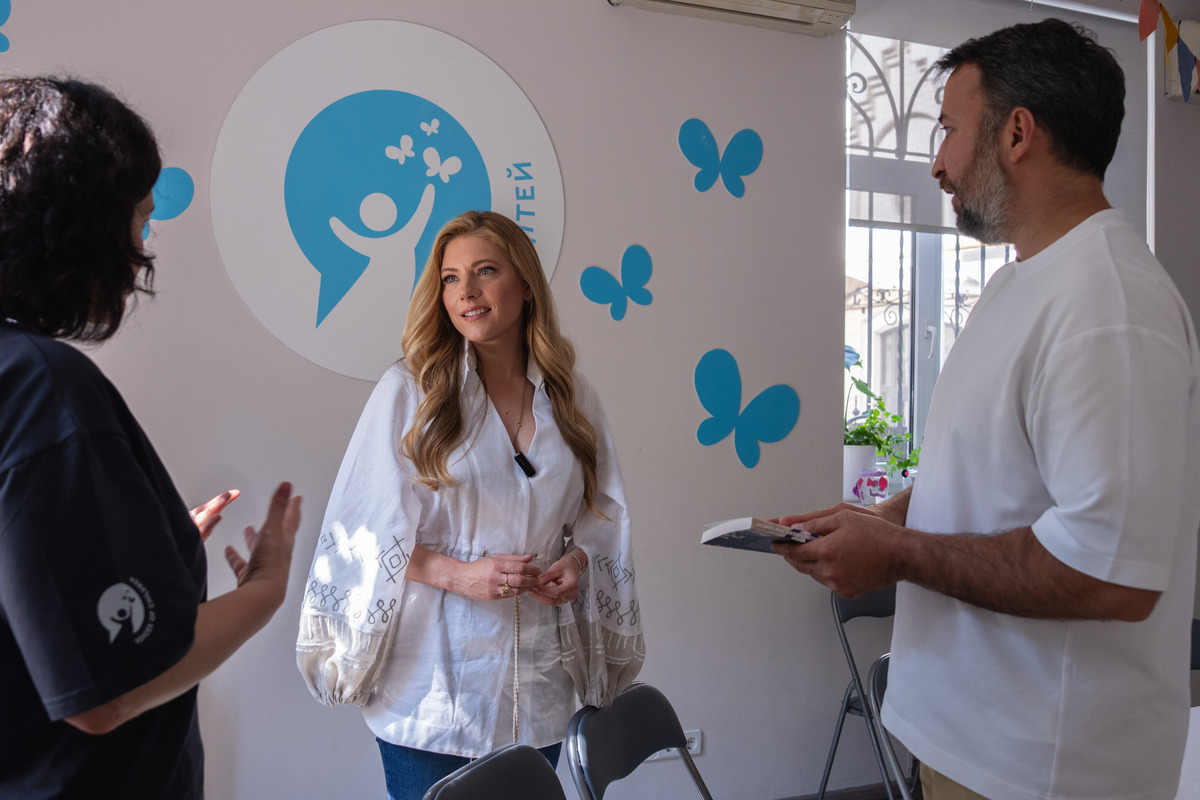
Olena Rozvadovska, co-founder of the Foundation, showed Katheryn around the center and told her about our work, the challenges we face every day, and the solutions we find. Katheryn spent a long time looking at the wall covered with photographs and children’s drawings, stopping at each one and asking the children what they liked most about the center and what they did there.
Olena Rozvadovska, co-founder of the Foundation, showed Katheryn around the center and told her about our work, the challenges we face every day, and the solutions we find. Katheryn spent a long time looking at the wall covered with photographs and children’s drawings, stopping at each one and asking the children what they liked most about the center and what they did there.
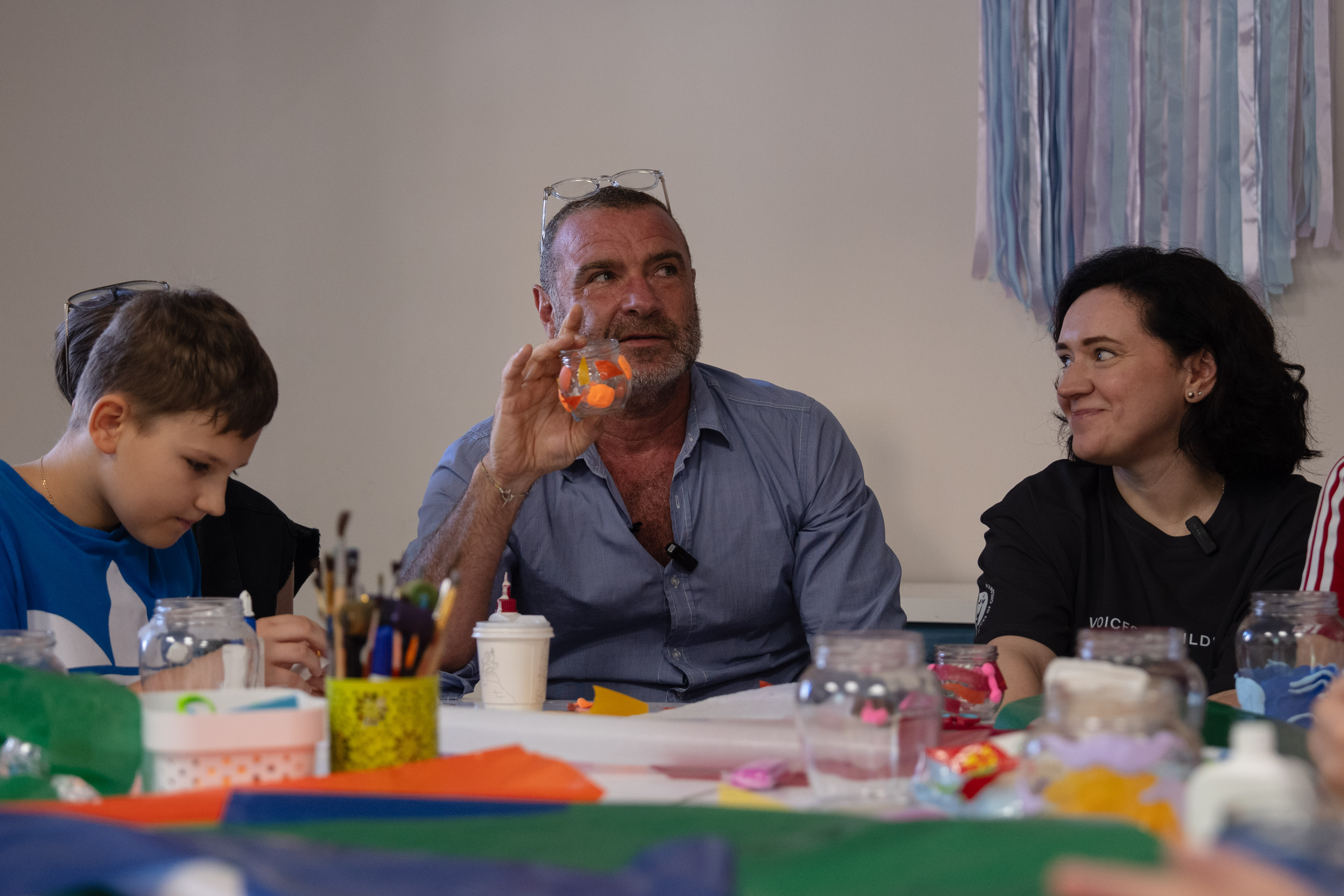
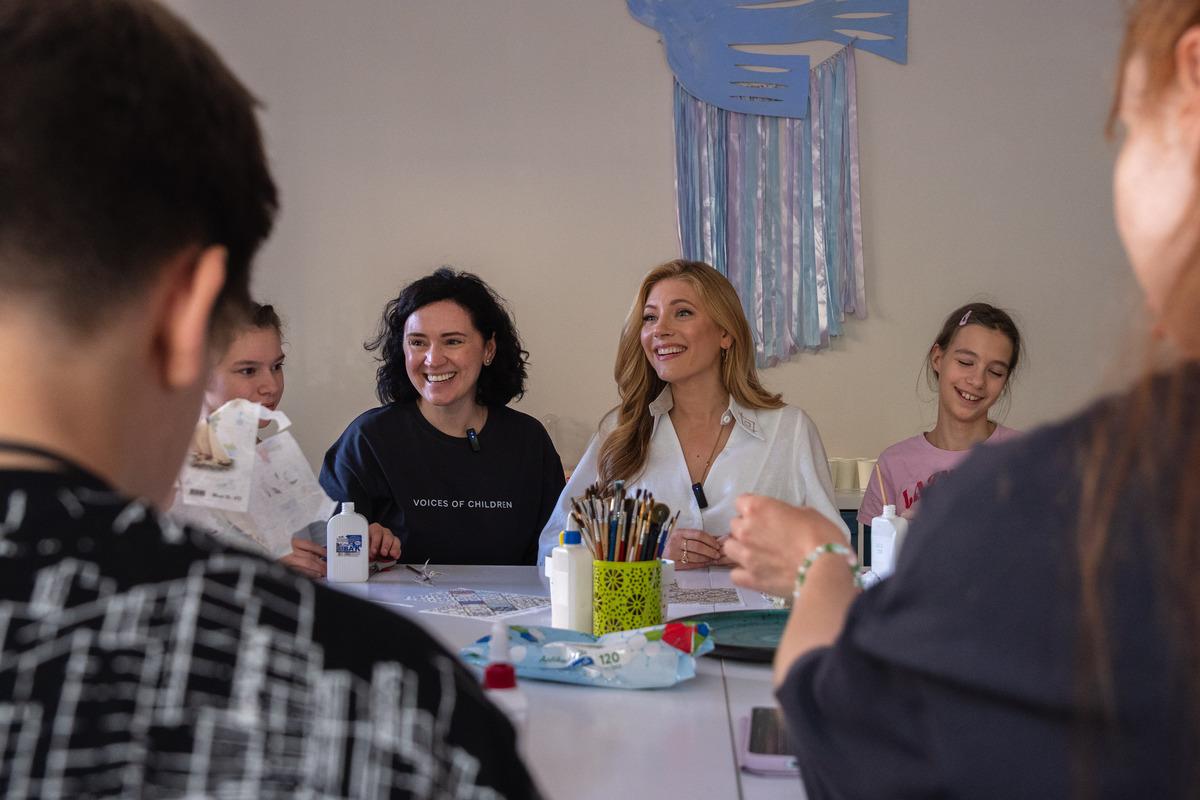
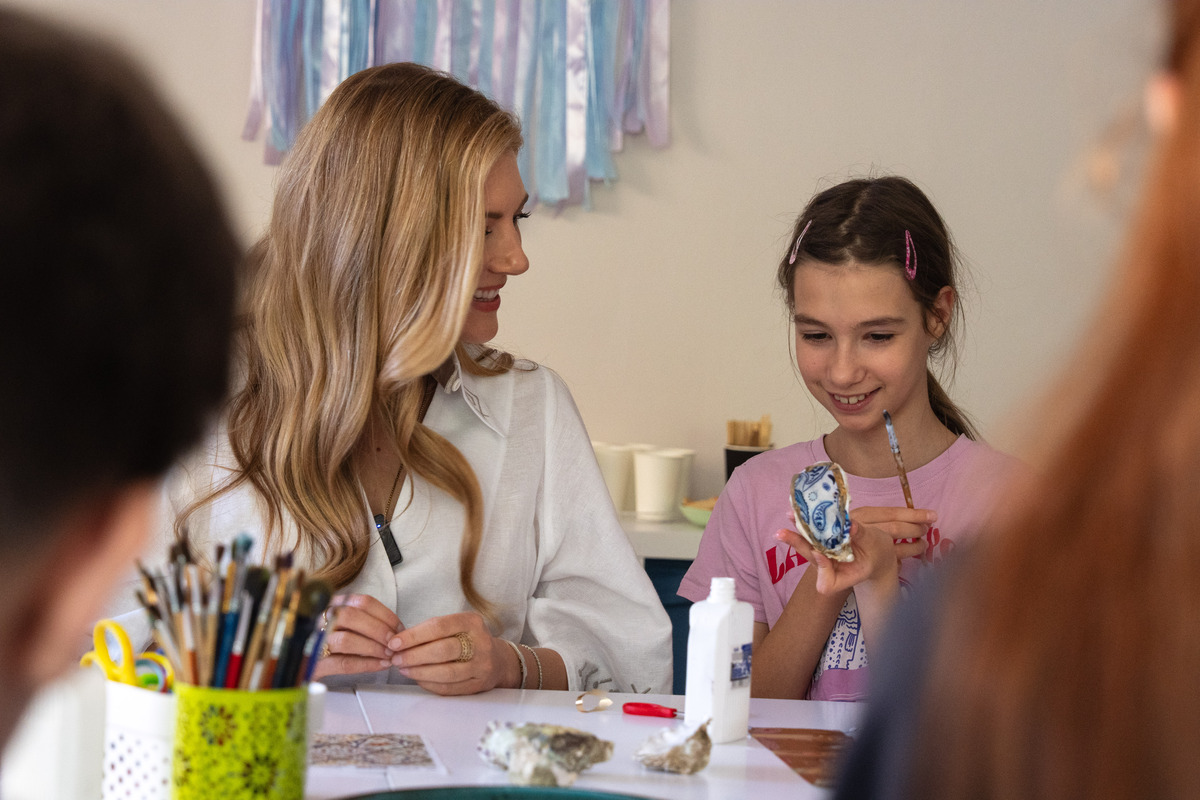
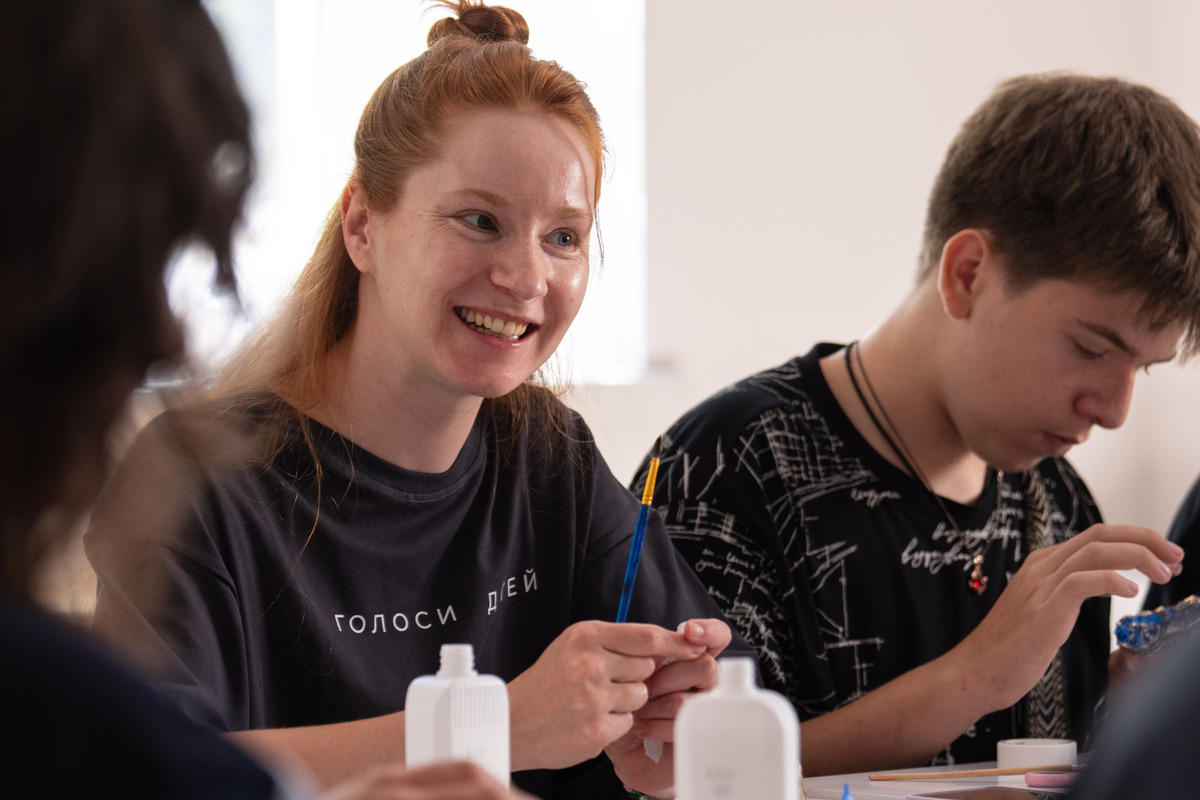
Our specialists organized a creative session to help everyone unwind. Katheryn and the Voices of Children team decorated oyster shells. The shells had been collected from a neighboring restaurant the day before, and everyone painted their own. Katheryn eagerly joined the children at the table and started working on hers. The teenagers asked her about things that mattered to them: how to find your path and how to understand what you truly enjoy. They were also curious about Katheryn’s Ukrainian roots and how she manages to stay connected to Ukrainian culture, traditions, and language while living abroad. She spoke a little Ukrainian, carefully choosing her words.
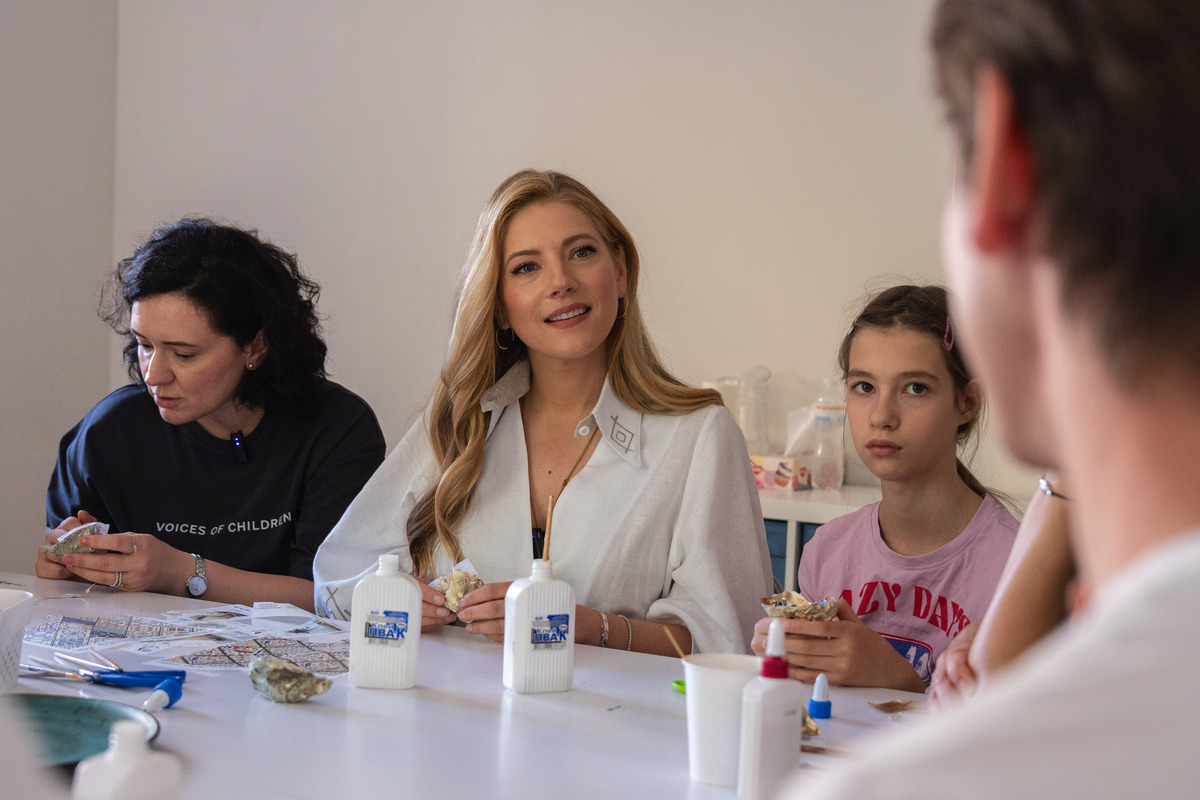
Among the children Katheryn met that day were some who had lived through Russian occupation. Some had been separated from their families and forcibly taken to Russia; others had spent years under occupation and had been forced to attend Russian schools. They were able to return home through the Ukrainian President’s Bring Kids Back UA initiative. Later, specialists from Voices of Children were there to help them cope with what they had experienced and rebuild a sense of home and belonging.
Katheryn spoke about the childhood that war has no right to take away: about safety, freedom, and the opportunity to explore the world without the fear that a missile could strike at any moment.
Katheryn spoke about the childhood that war has no right to take away: about safety, freedom, and the opportunity to explore the world without the fear that a missile could strike at any moment.
I got the chance to speak with a child who was under Russian occupation and separated from her family, and to see in her eyes what she went through. And the heartbreak, and the fear that she has was so hard for me to hear. We need to do everything we can to protect our children,
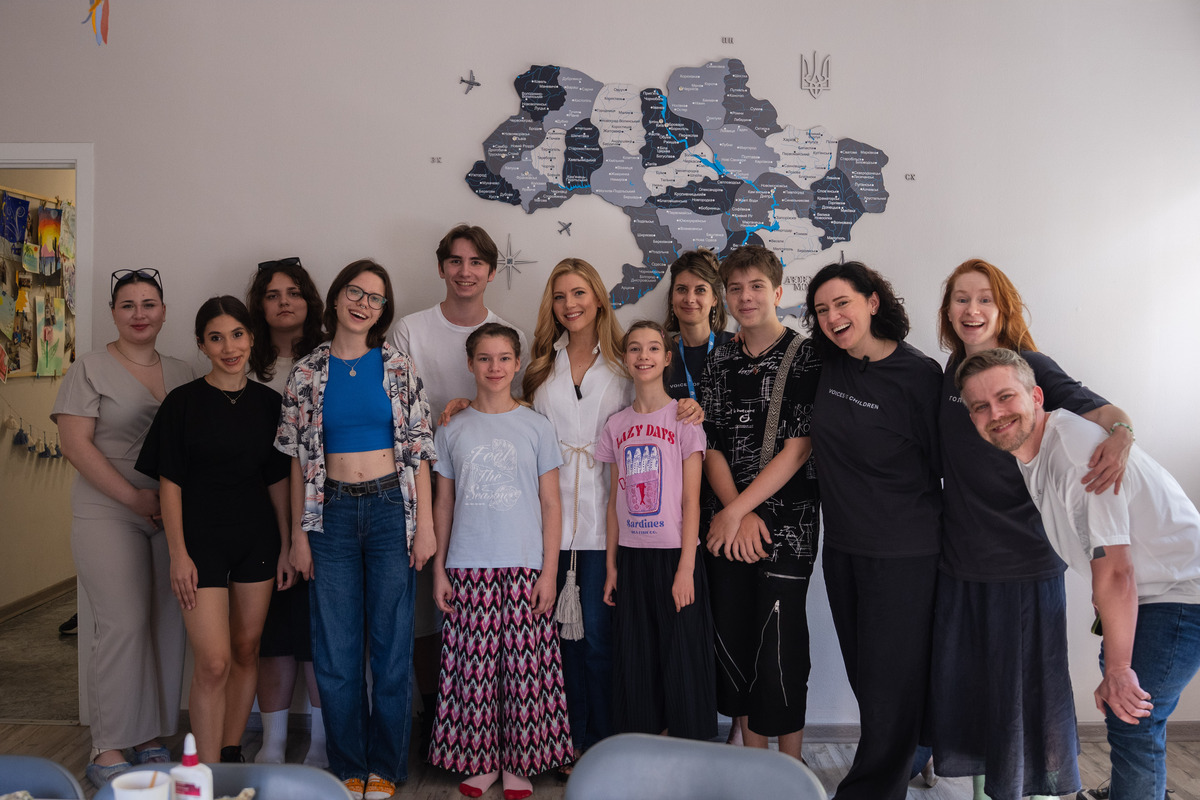
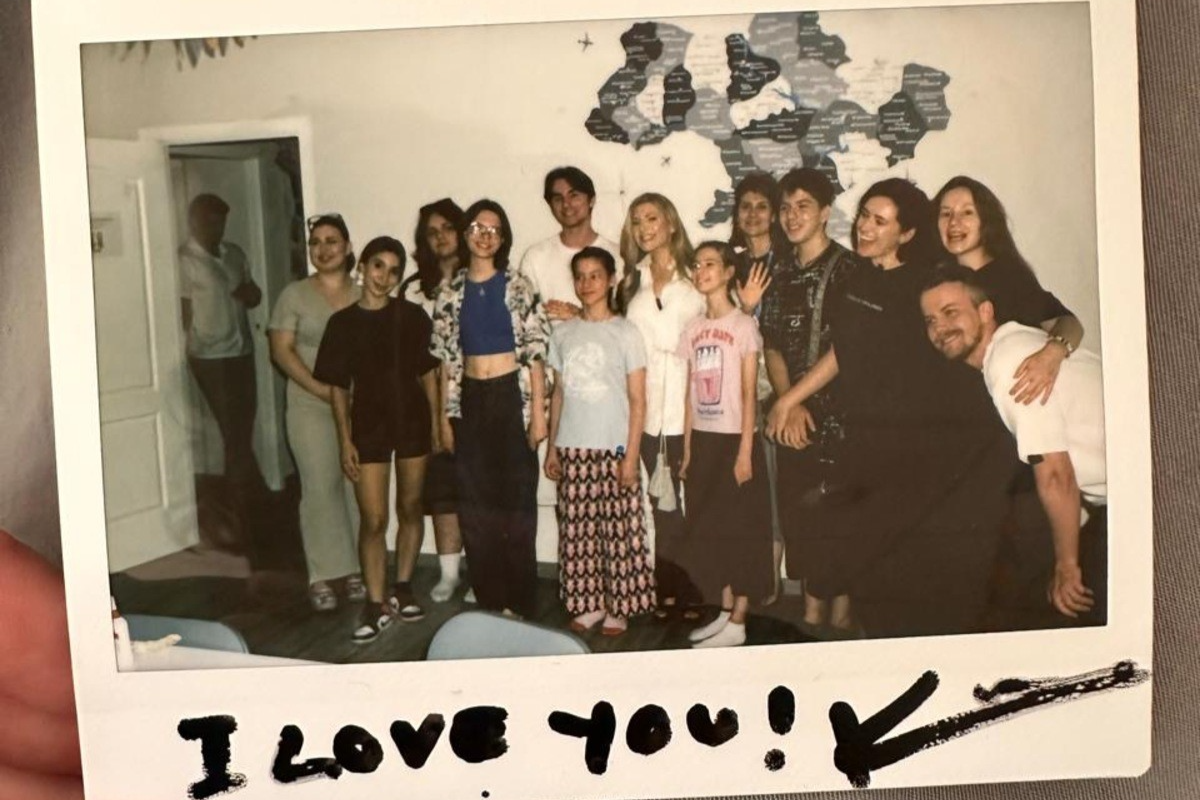
Olena Rozvadovska asked whether she would stay for Independence Day. Katheryn confirmed that she would. She said she had specifically wanted to be in Ukraine on that day and was very happy she had been able to come. To remember the visit, everyone took an Instax photo together, and Katheryn signed it for our memory wall: “I love you!”
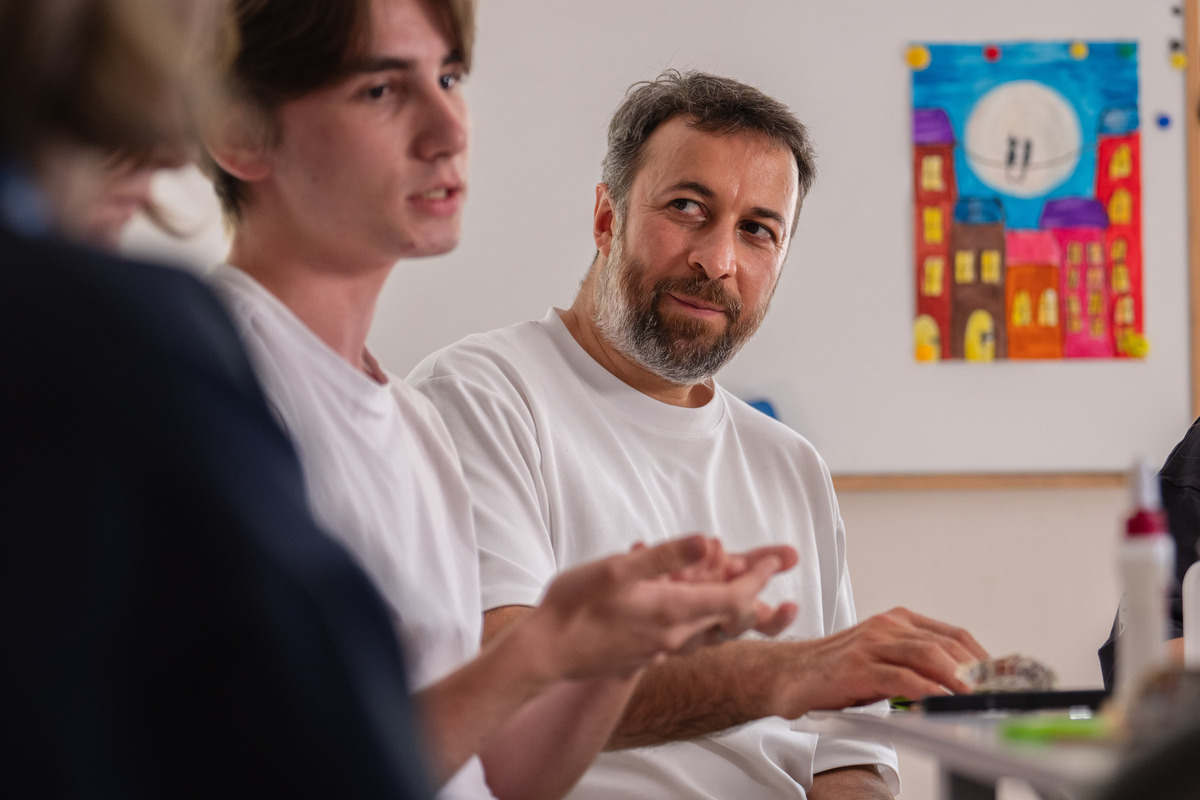
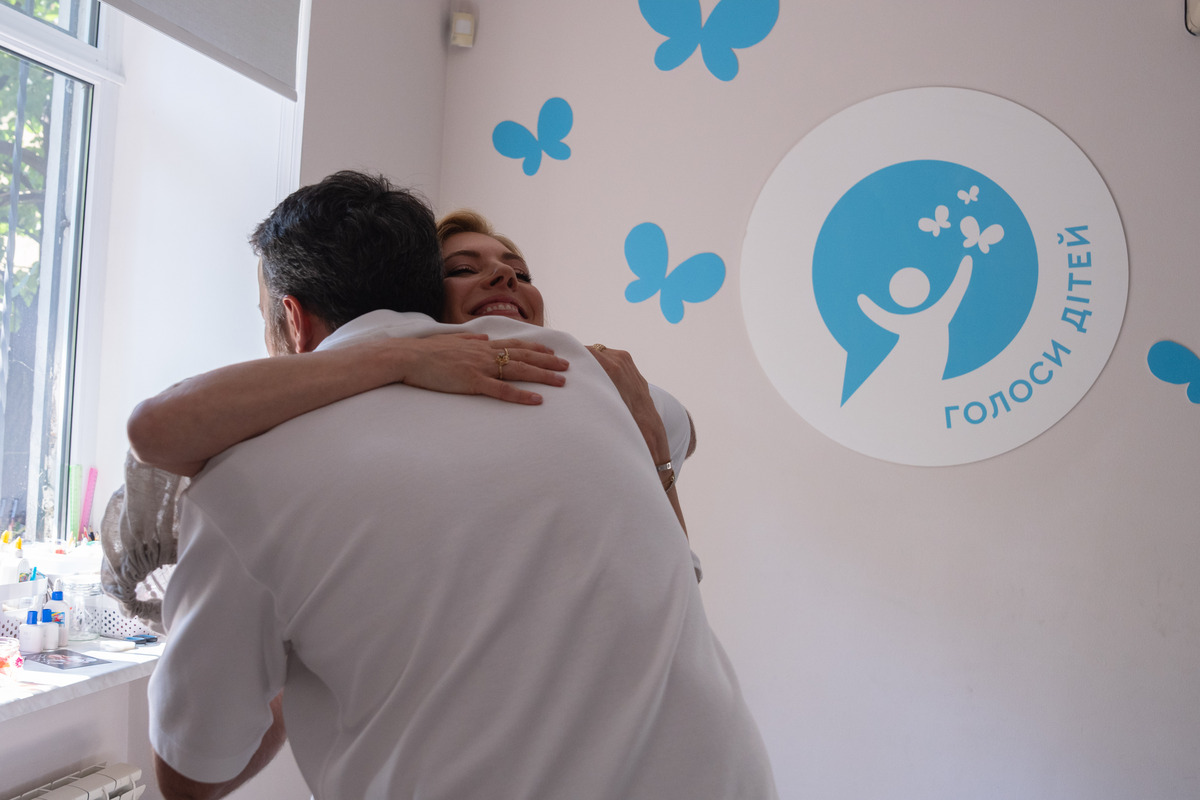
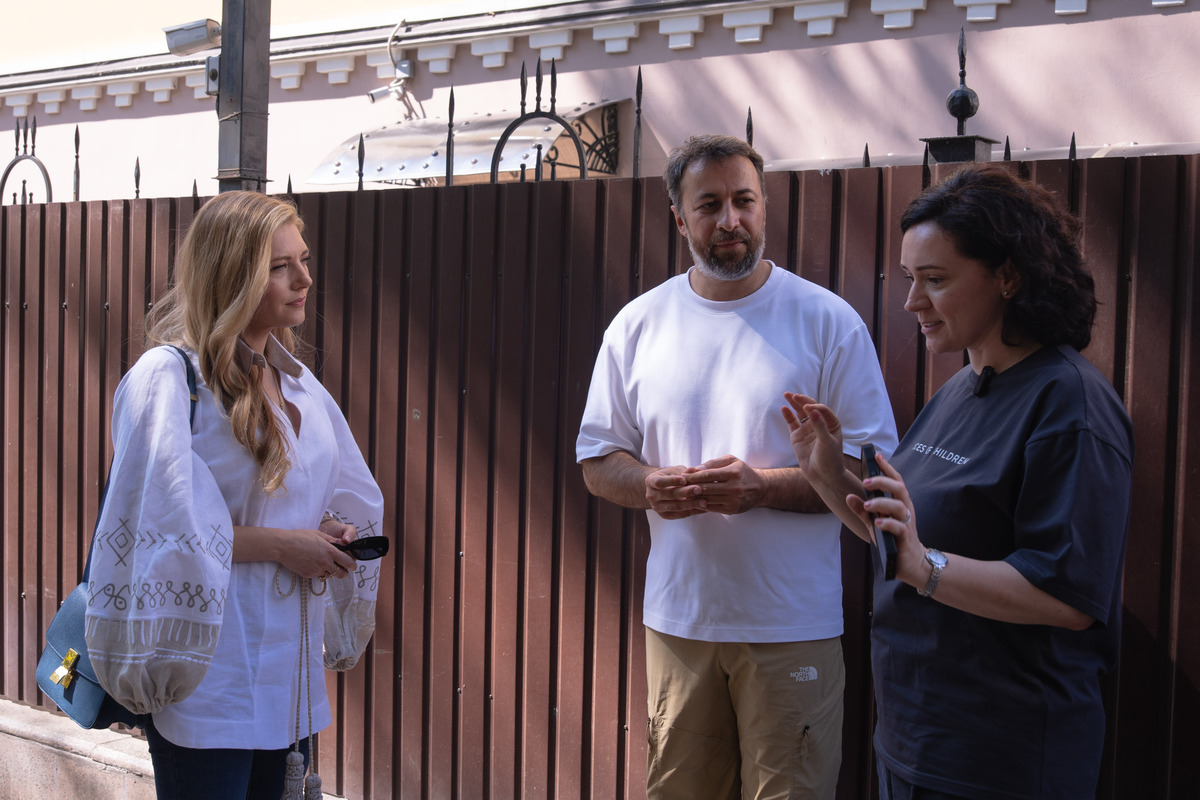
There were also warm, everyday moments that usually happen off camera. As the team was getting ready to film, Katheryn’s companion was entrusted with attaching her lavalier microphone — and the tiny clip did not survive the pressure, quietly snapping in his hands. Everyone laughed together. A little later, he began asking with genuine curiosity about Ukrainian traditions and wanted someone to explain the schedule of church services: what the Hours are and how an early Liturgy differs from a later one. His questions reflected a genuine desire to understand the rhythms and traditions of life in Ukraine.
There were also warm, everyday moments that usually happen off camera. As the team was getting ready to film, Katheryn’s companion was entrusted with attaching her lavalier microphone — and the tiny clip did not survive the pressure, quietly snapping in his hands. Everyone laughed together. A little later, he began asking with genuine curiosity about Ukrainian traditions and wanted someone to explain the schedule of church services: what the Hours are and how an early Liturgy differs from a later one. His questions reflected a genuine desire to understand the rhythms and traditions of life in Ukraine.
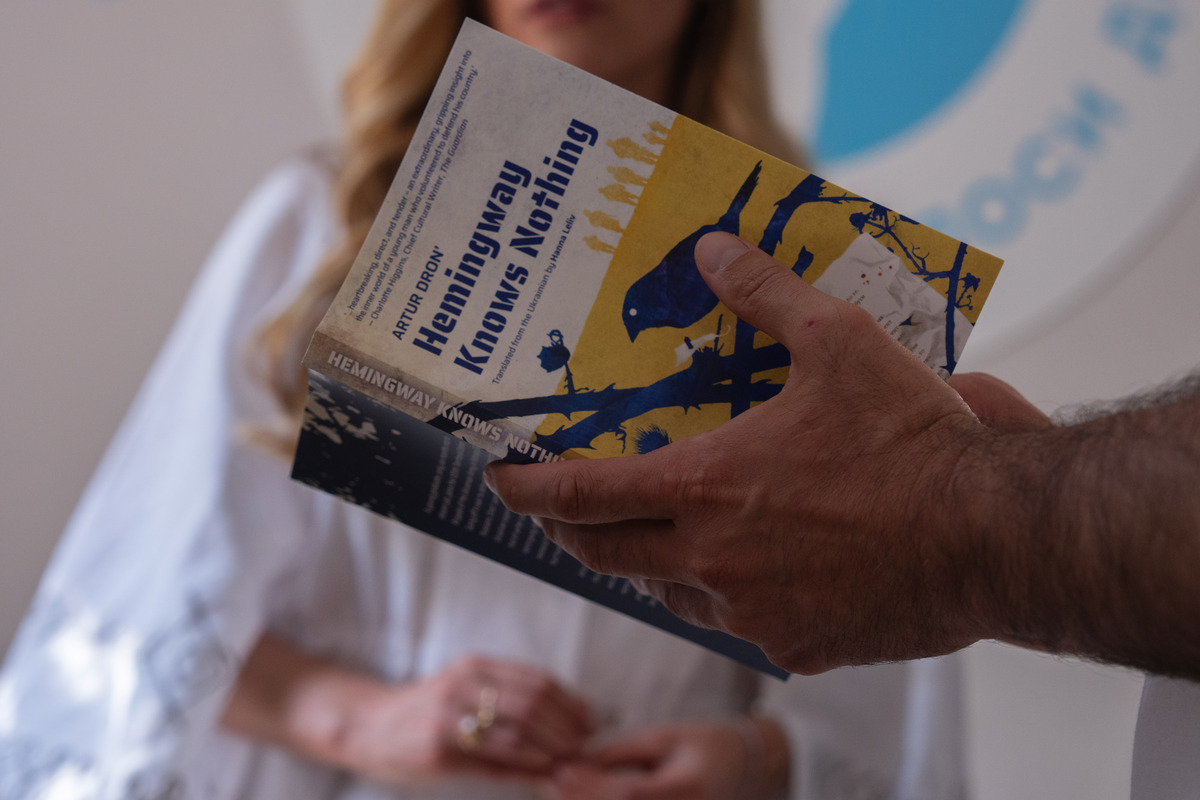
To remember the meeting, Azad Safarov, co-founder of the Foundation, gave Katheryn a Voices of Children T-shirt and a copy of Artur Dron’s book Hemingway Knows Nothing. Artur joined the military at the age of 22, leaving university behind, and was later seriously wounded. In the book, he tells the story of the war through deeply human experiences. It has become one of the bestselling books about the war in Ukraine.
Katheryn also received an English-language edition of the poetry collection Oxygen. Books Must See Their Poets. Through it, she discovered the work of teenagers who had taken part in the Foundation’s arts labs and had joined our campaign, Children’s Poetry During the War, in the Voices of Adults. The poem Katheryn read was written by young poet Kateryna Skorokhod. Katia lives in Chernihiv. She began writing shortly before joining our poetry lab with elements of art therapy. She struggled deeply with the Russian attacks and siege of her hometown, and the community she found there became a source of support during the darkest months.
Since then, Katia has grown older: she is actively studying English and is now in high school, while her writing has matured alongside her. She is one of the thirteen authors featured in Oxygen. For each of these teenagers, poetry became a way to process the emotions of living through war, and these poems are where they put those experiences into words.
Since then, Katia has grown older: she is actively studying English and is now in high school, while her writing has matured alongside her. She is one of the thirteen authors featured in Oxygen. For each of these teenagers, poetry became a way to process the emotions of living through war, and these poems are where they put those experiences into words.
Hold fast to anything you can. Hold fast to life.
No matter how hard it gets.
Live.
No matter how hard it gets.
Live.
Katheryn left, but her “I love you” remains on our memory wall, alongside children’s drawings and photographs of the people who have visited us. Perhaps the best way to sum up that day is through the lines by Kateryna that Katheryn chose to read: hold fast to life. No matter how hard it gets. Live.
For these words to become a reality for as many children as possible, specialists across Ukraine need to be there for them every day. That work is only possible thanks to you.
For these words to become a reality for as many children as possible, specialists across Ukraine need to be there for them every day. That work is only possible thanks to you.
Join us by making a donation
Share: