Author:

Yuliia Didenko
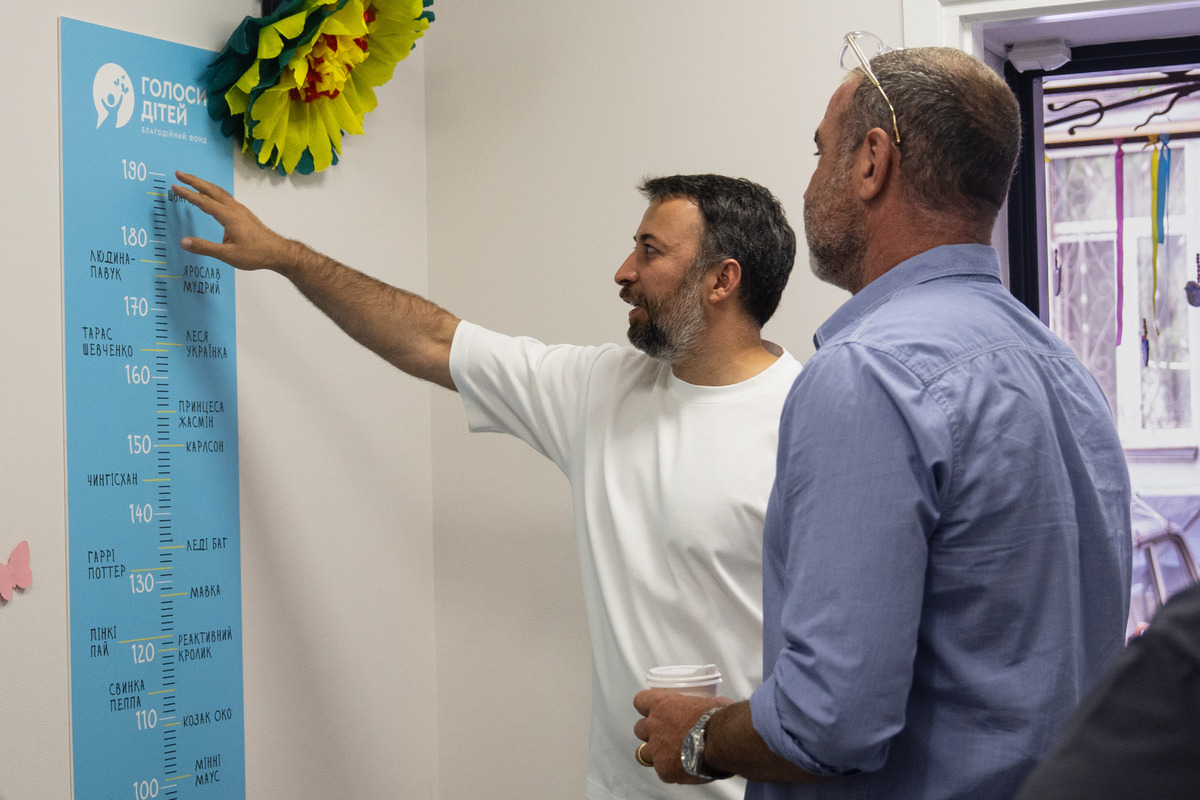
American actor Liev Schreiber recently visited Kyiv together with BlueCheck, his organization that provides funding for grassroots humanitarian initiatives. He came to the Voices of Children center as a friend and partner of the Foundation. After another night of Russian attacks on the city, Schreiber spent time with the children supported by the Foundation, and later spoke about the visit on social media and on CNN.
When journalist Jim Sciutto asked Liev whether Ukrainians felt resentment over the lack of support from the West, Schreiber said people had long since moved past the point of frustration.
They don’t have time for that. They’re really just looking for solutions,
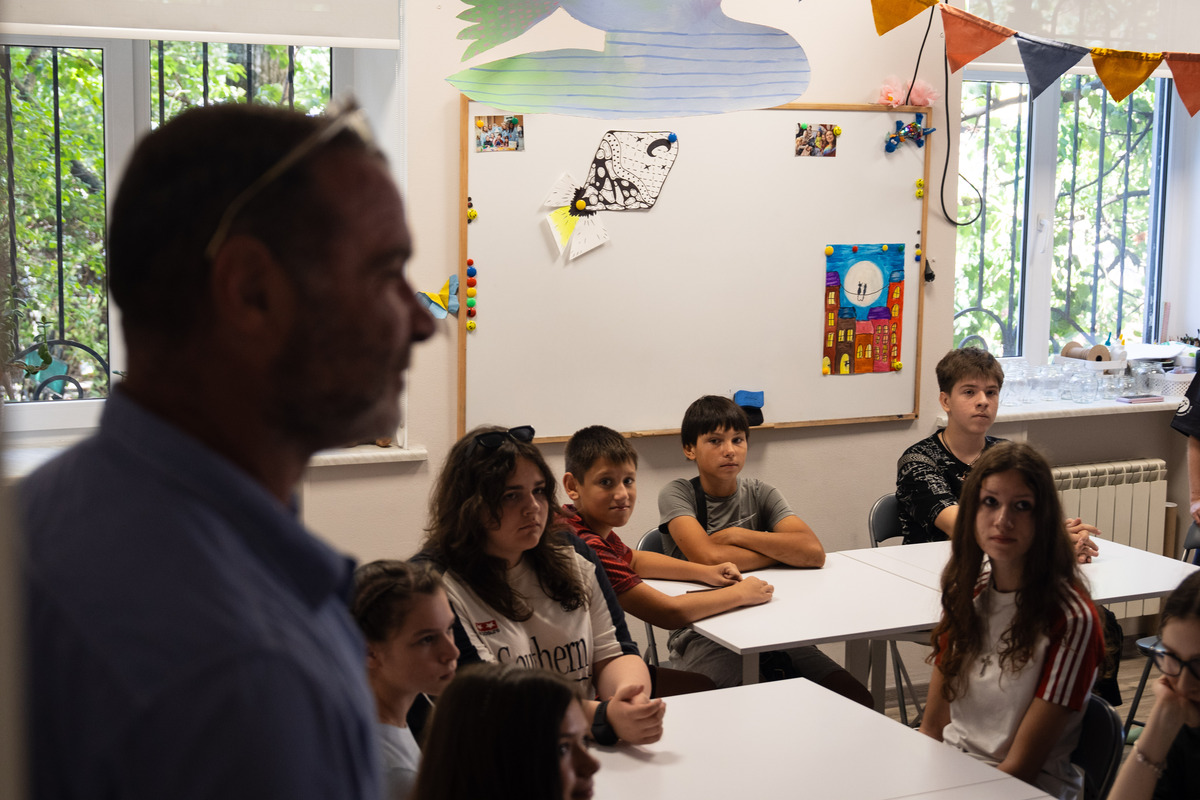
During his visit to Kyiv in August, Schreiber came to the Voices of Children regional center and spoke with children and teenagers, including those who had lived through the Russian occupation or had been forced to leave their homes because of the war.
One of the organizations we met with was Voices of Children. They’re dealing with tremendous numbers of internally displaced kids — kids who had to leave their families in occupied areas and dangerous areas,
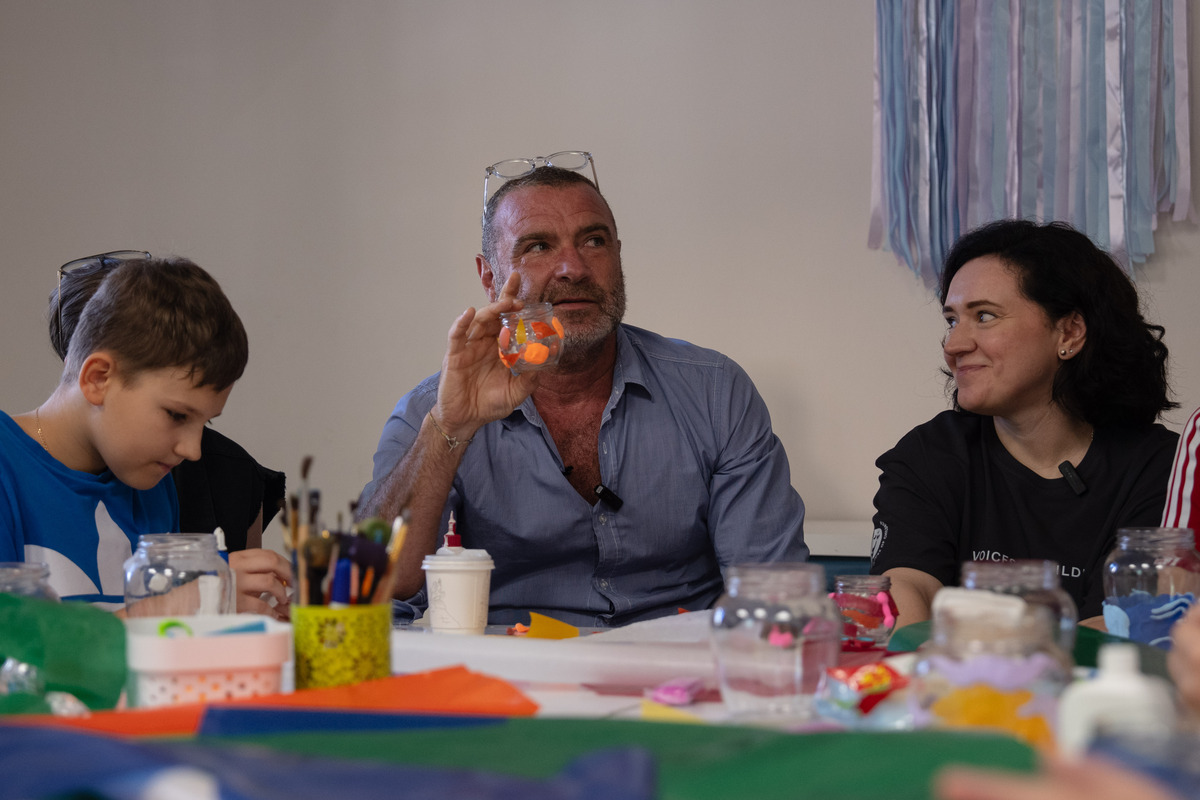
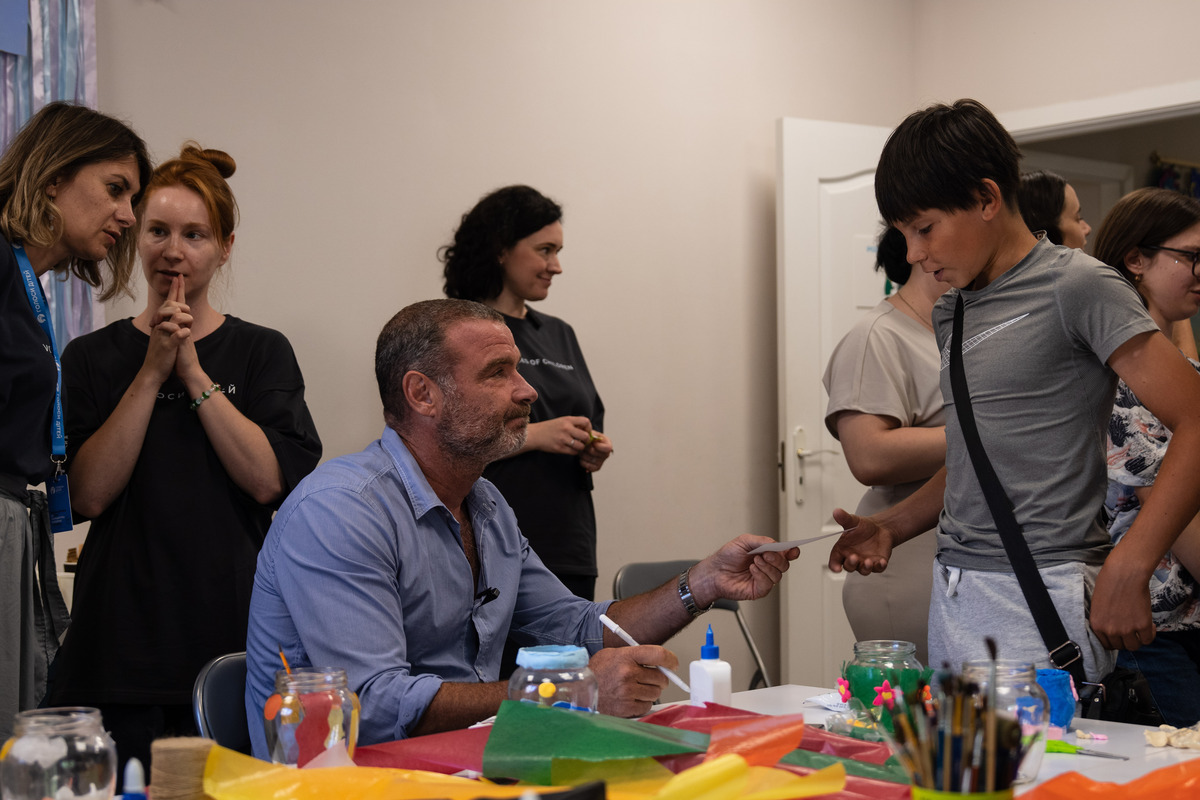
That day, the children at the center were making candle holders. Schreiber joined them at the table and started making his own. When he heard they were making “zakrutky” — a Ukrainian word for jars of preserved food traditionally prepared for winter, which the children were recreating as keepsakes of the passing summer — he was surprised: “I thought it was ice cream.”
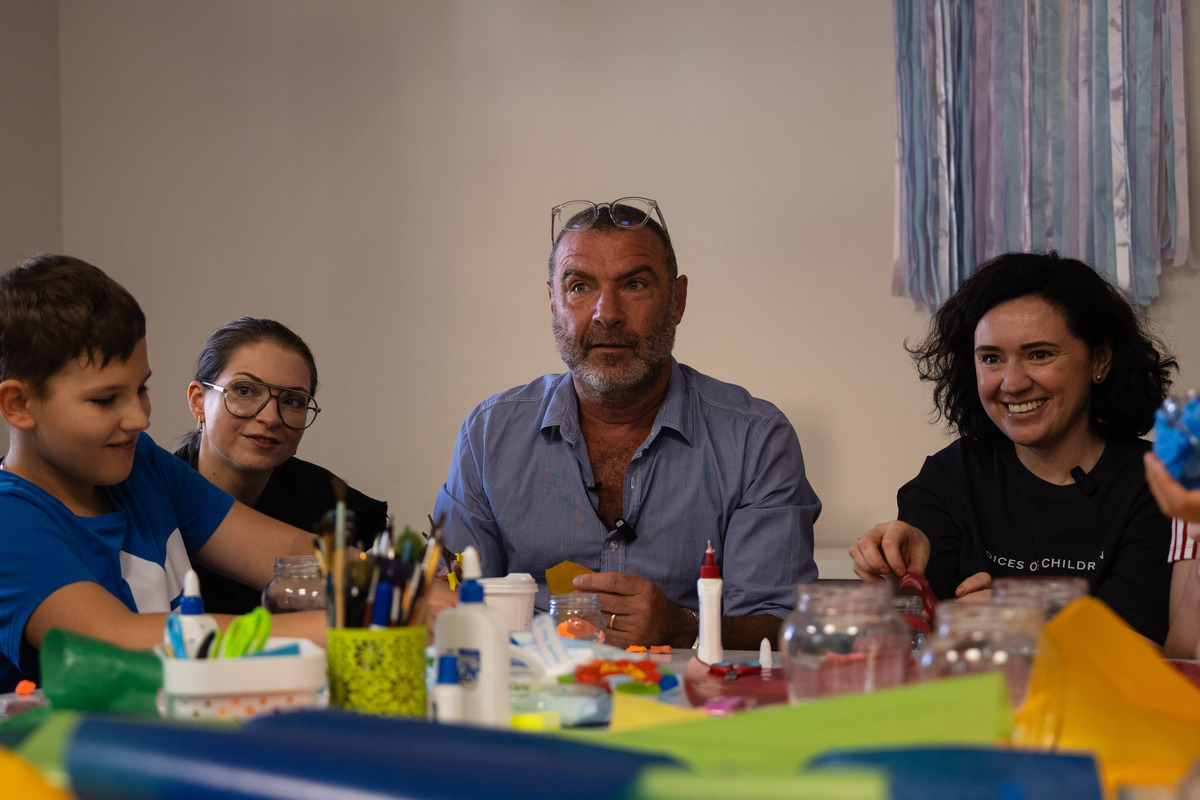
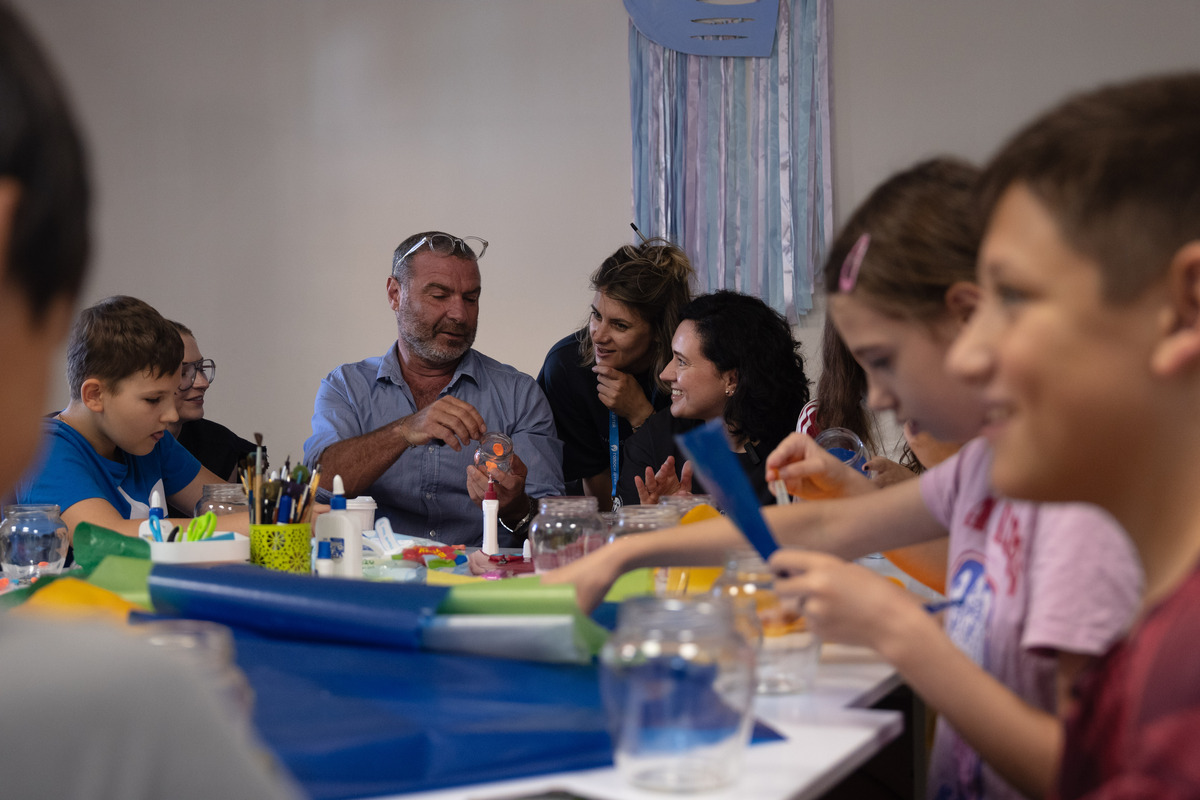
Some of the children recognized him immediately. As soon as he walked in, one girl exclaimed, “It’s an X-Man!” Another gave Liev a drawing. The actor has previously said that he is trying to learn Ukrainian and has already recorded several greetings in the language. He turned the drawing over to read the message on the back and began sounding out the Ukrainian words syllable by syllable. Olena Rozvadovska, co-founder of Voices of Children, jumped in to help, until Schreiber laughed: “Give me a chance! Jesus!”
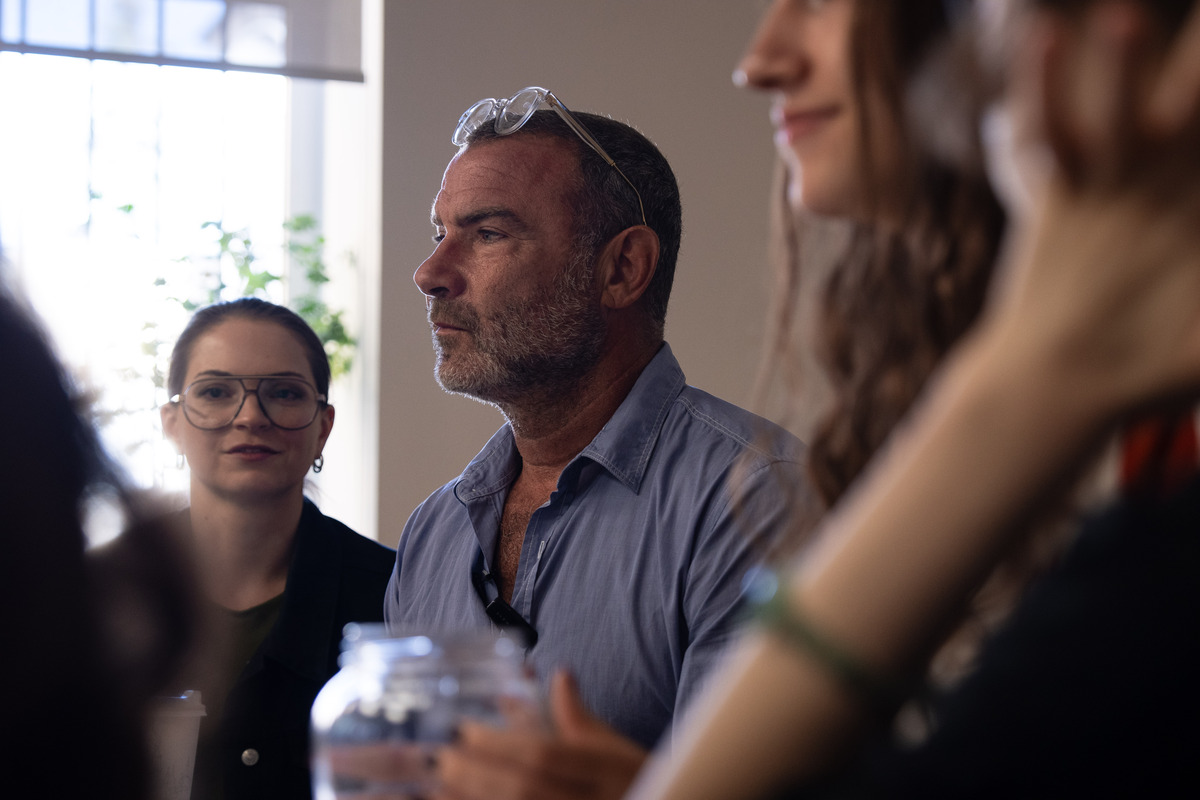

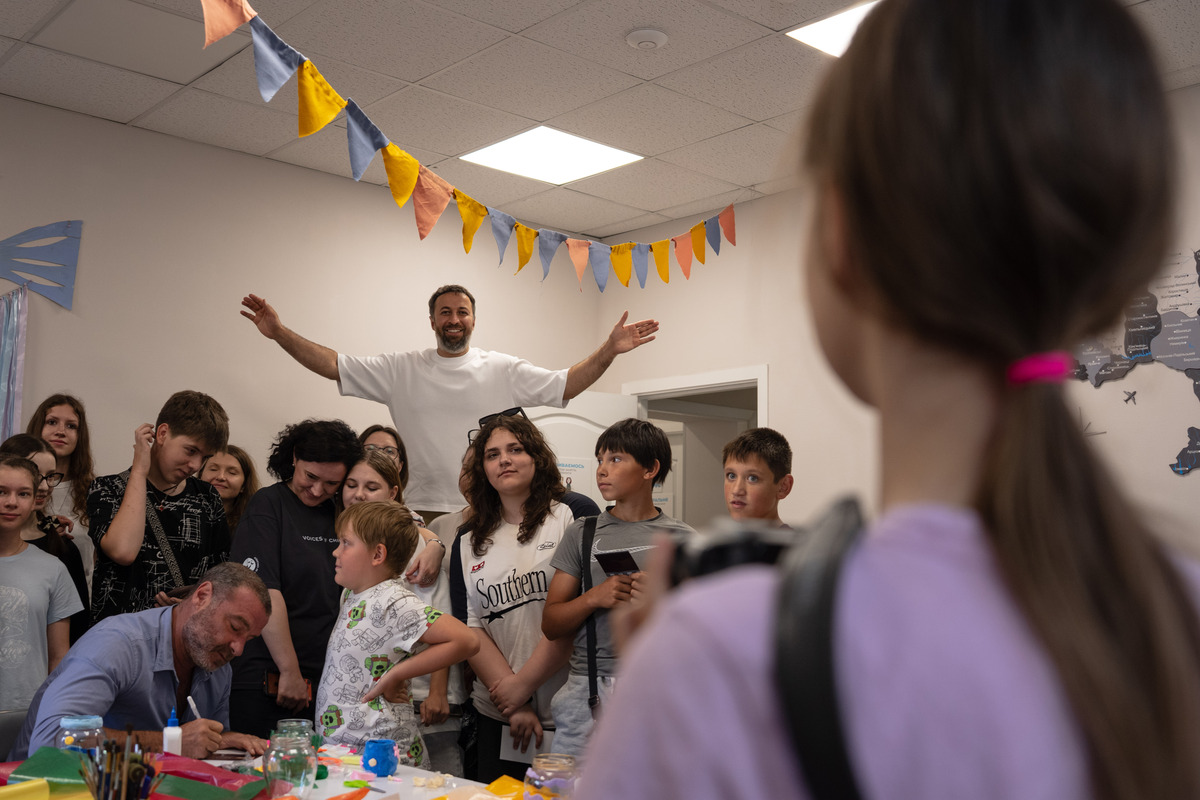
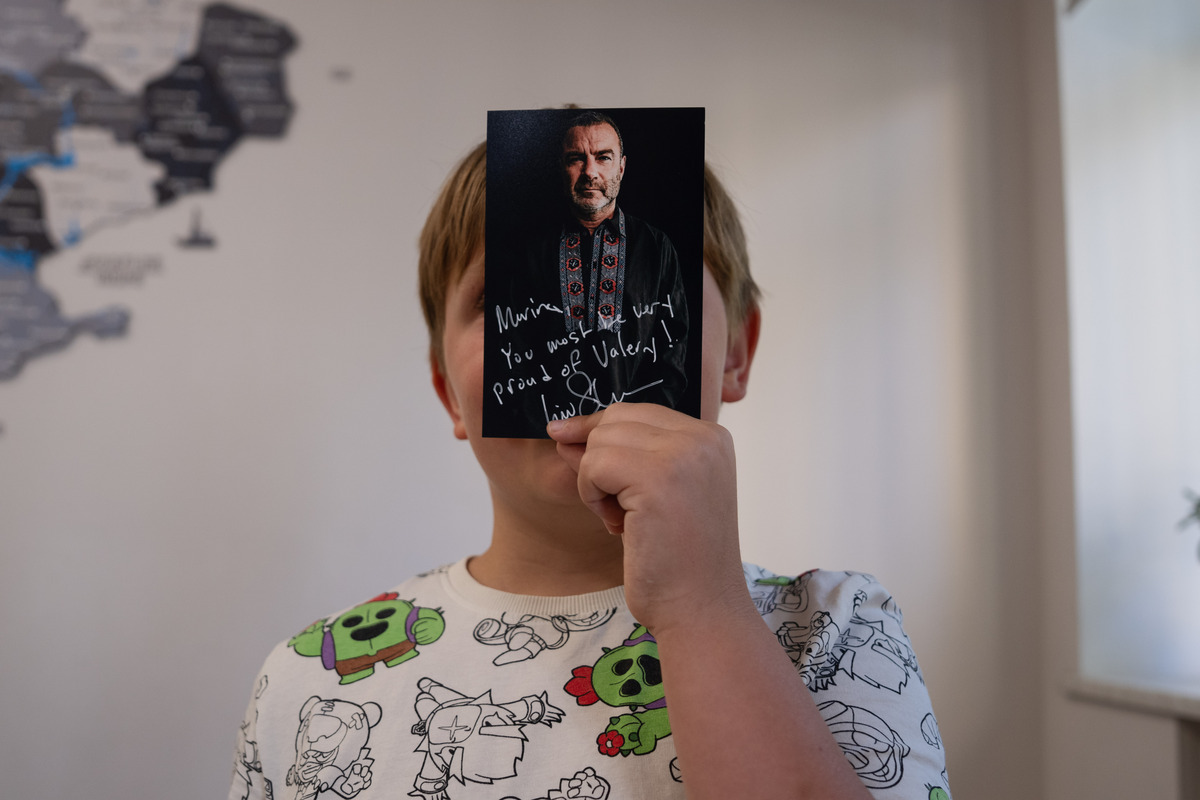
Liev spent a lot of time talking to Artur, a boy who dreams of being on stage. Later, back home, the actor wrote to the Foundation that he hoped Artur had already mapped out his shortest route to stardom. The boy is from Zaporizhzhia, a city that comes under Russian attack almost every night. Once, a blast shattered the windows of his home and knocked out the power, triggering a panic attack.
A psychologist from Voices of Children helped Artur learn how to regain control in moments like this. Those skills helped him during another attack, when he was near a football field: this time, he was able to calm himself and help his friends get to safety. Voices of Children shared Artur’s story as part of “Thread,” an exhibition about the transformation of children forced to grow up amid war.
A psychologist from Voices of Children helped Artur learn how to regain control in moments like this. Those skills helped him during another attack, when he was near a football field: this time, he was able to calm himself and help his friends get to safety. Voices of Children shared Artur’s story as part of “Thread,” an exhibition about the transformation of children forced to grow up amid war.
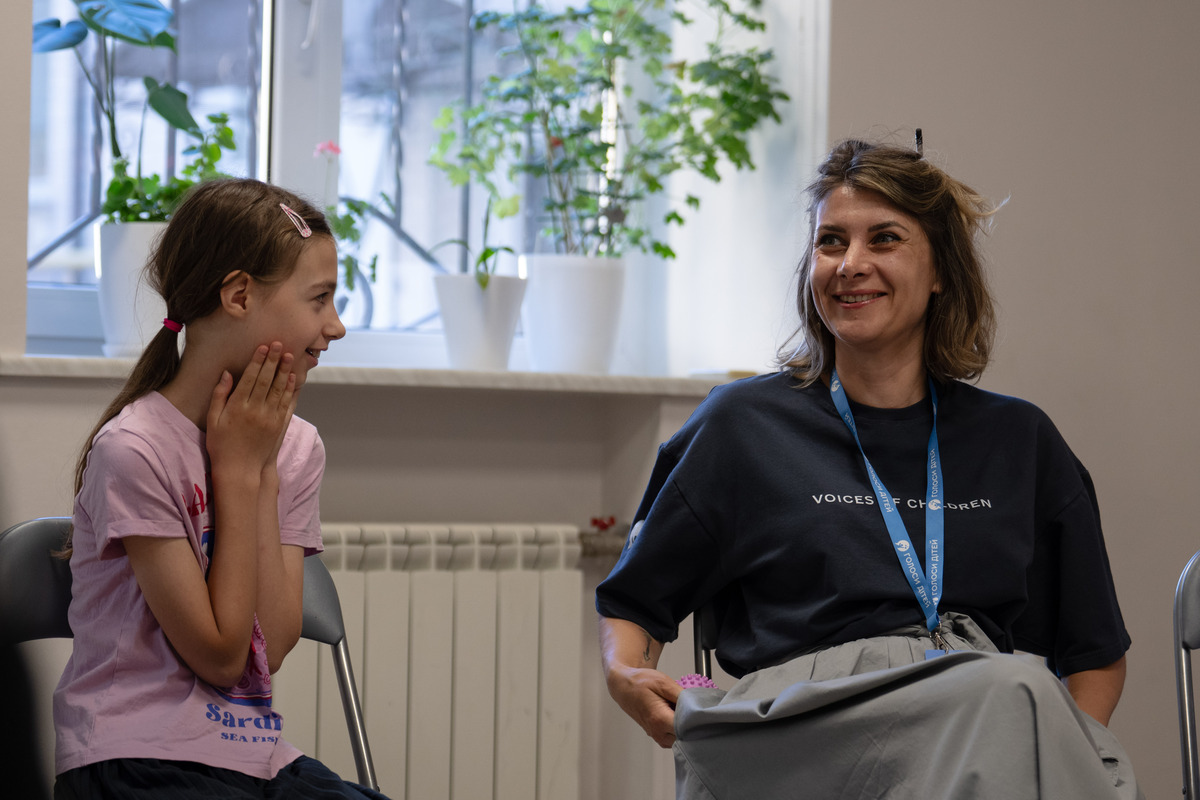
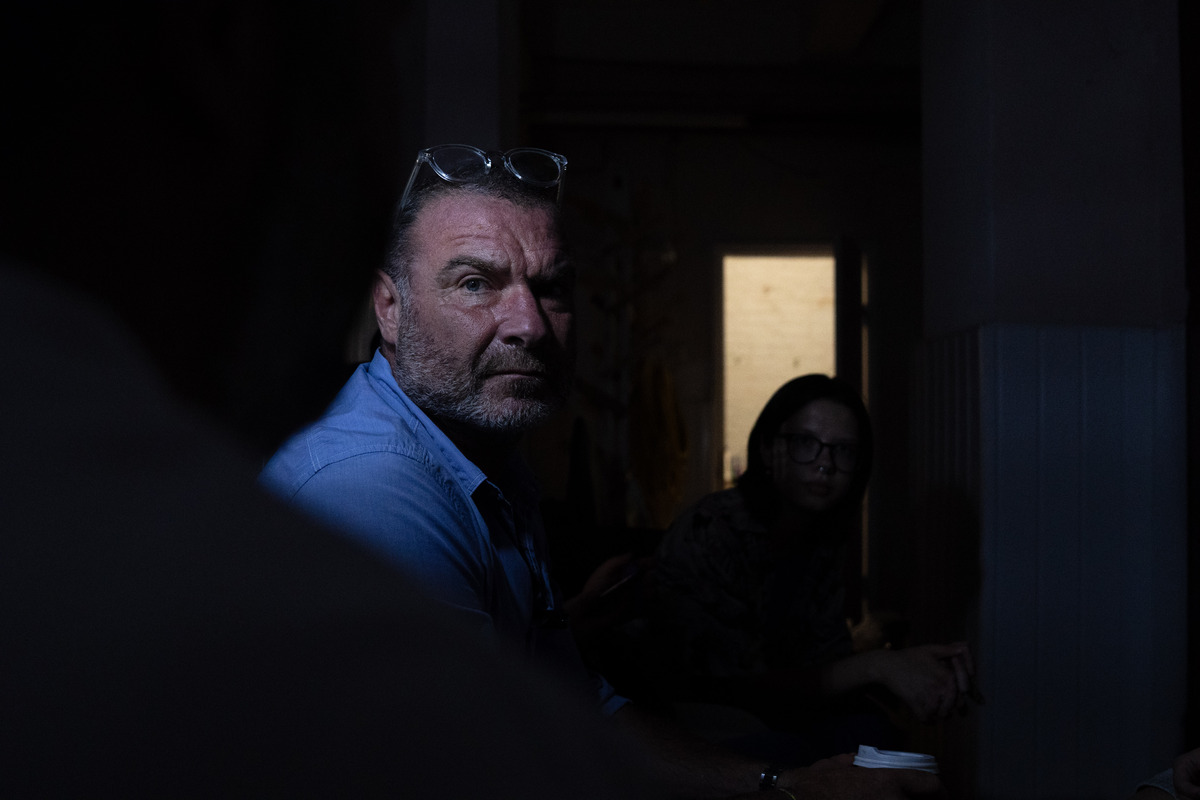
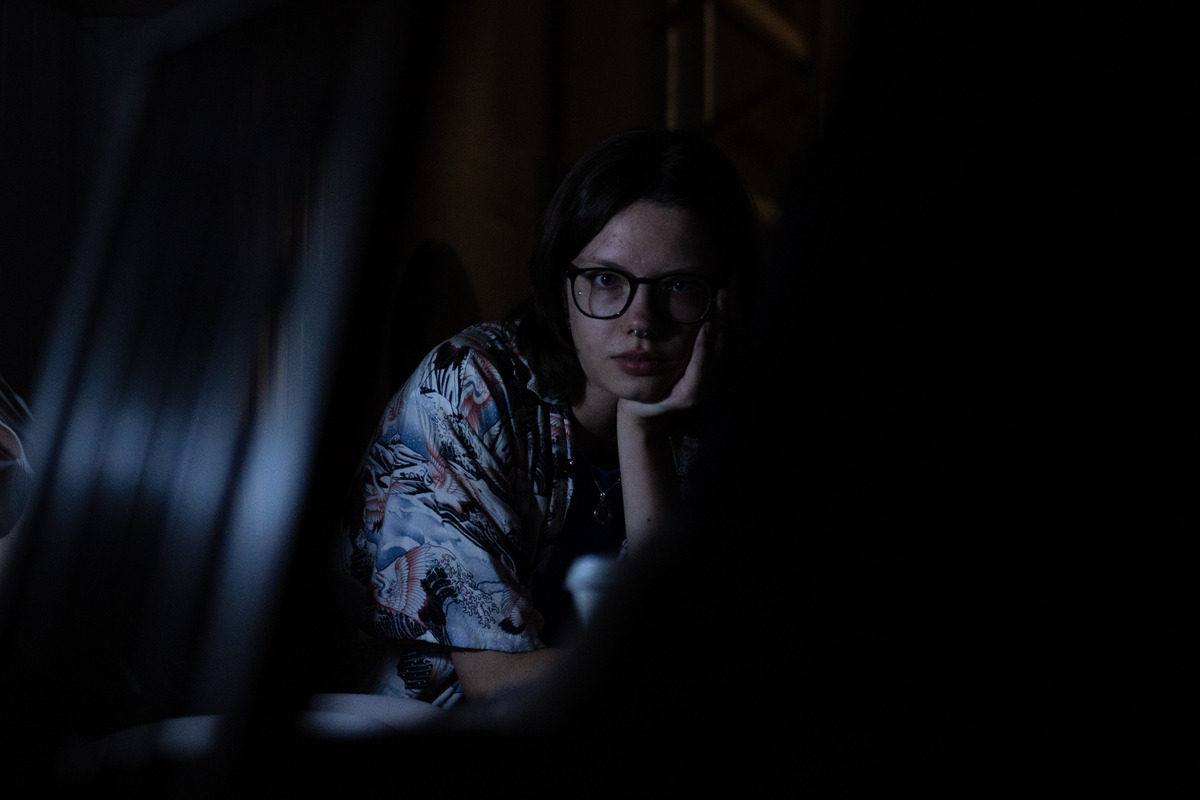
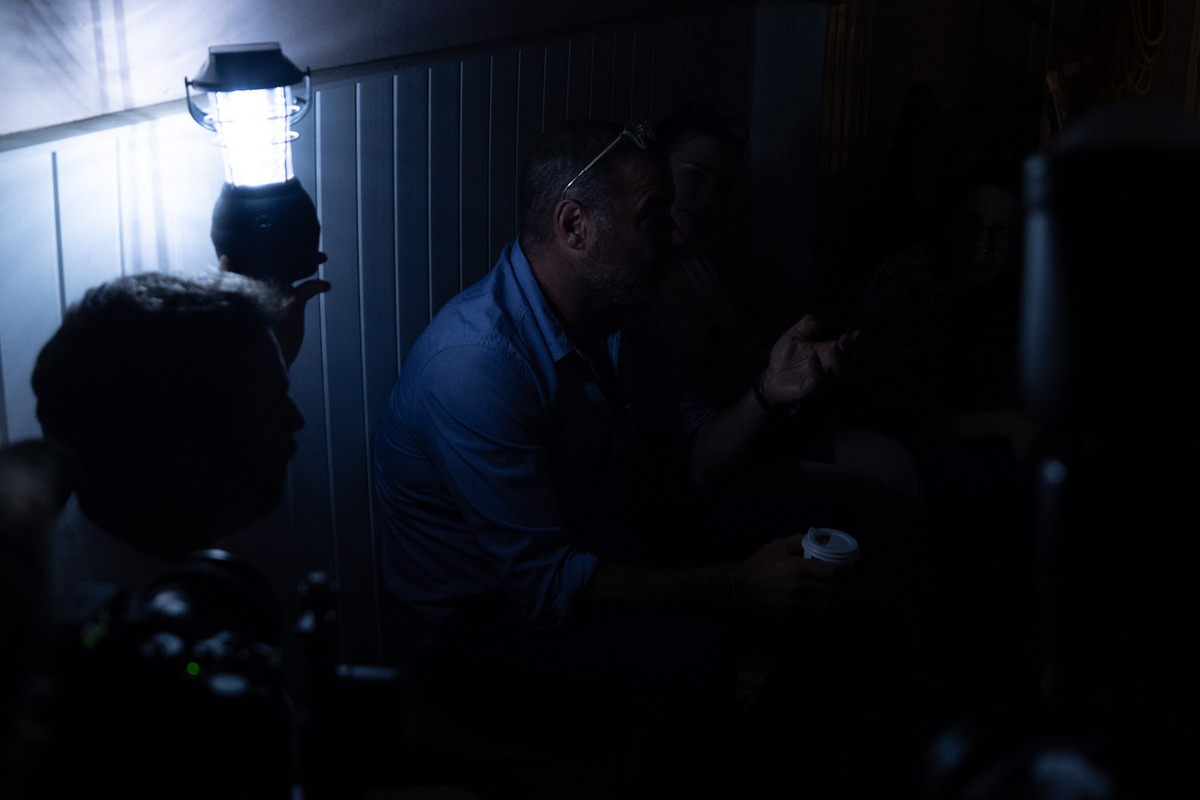
In the middle of the visit, an air raid alert went off, and part of the conversation had to move to the shelter. For the next half hour, Schreiber talked with three teenage girls and listened to their stories. Ania and Dasha had lived through the Russian occupation, while Halia had fled Bakhmut. They told the actor about themselves and their plans for the future.
It was extraordinary listening to them, what they had been through,
Ania spent ten years living in occupied Donetsk. Her parents sent her to Kyiv to keep her safe. Schreiber asked what she wanted to be when she grew up. A lawyer, she answered. When he asked what kind of law she wanted to practice, she answered: civil rights, so that what happened to her would never happen to anyone else.
For me, that is a very typical Ukrainian response: How can we find a solution? How do we solve the problem that’s in front of us?
Liev recalled how hard his grandparents had worked to make it to America and described the trip as a debt he owed them.
I wouldn’t be successful, and I wouldn’t be able to travel to Ukraine, unless my grandparents had worked so hard, so that they could have the opportunities, and the freedom, and the liberties, so that I could do what I wanted to do.
He also spoke about the freedom to choose that earlier generations had worked for — the freedom to become a lawyer, an art historian, a playwright, or a tattoo artist, as Dasha hopes to do. His words echoed Ania’s own dream of defending human rights. Another reason he came to Ukraine was for his own children. He wanted to set an example for them.
My kids grew up really easy, they don’t know hard times. I want my children to understand what sacrifice is, and I don’t think there’s anywhere in the world where sacrifice is clearer than anything.
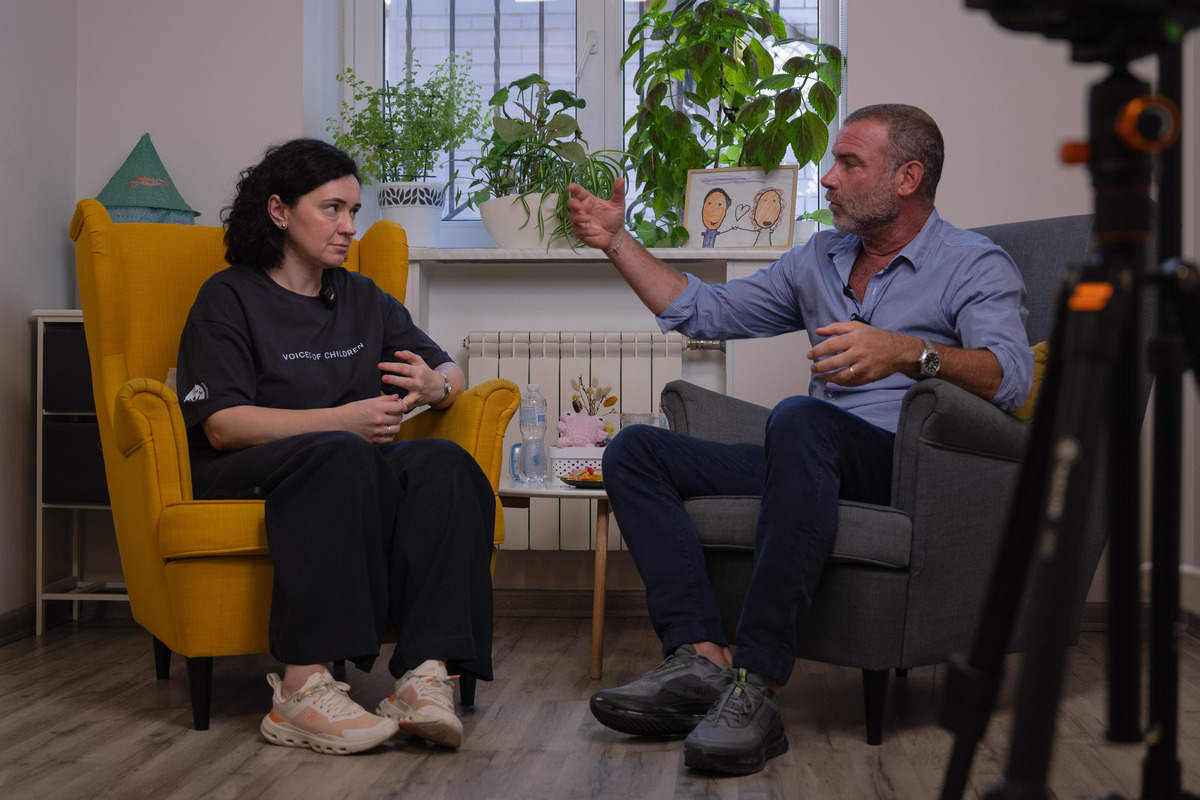
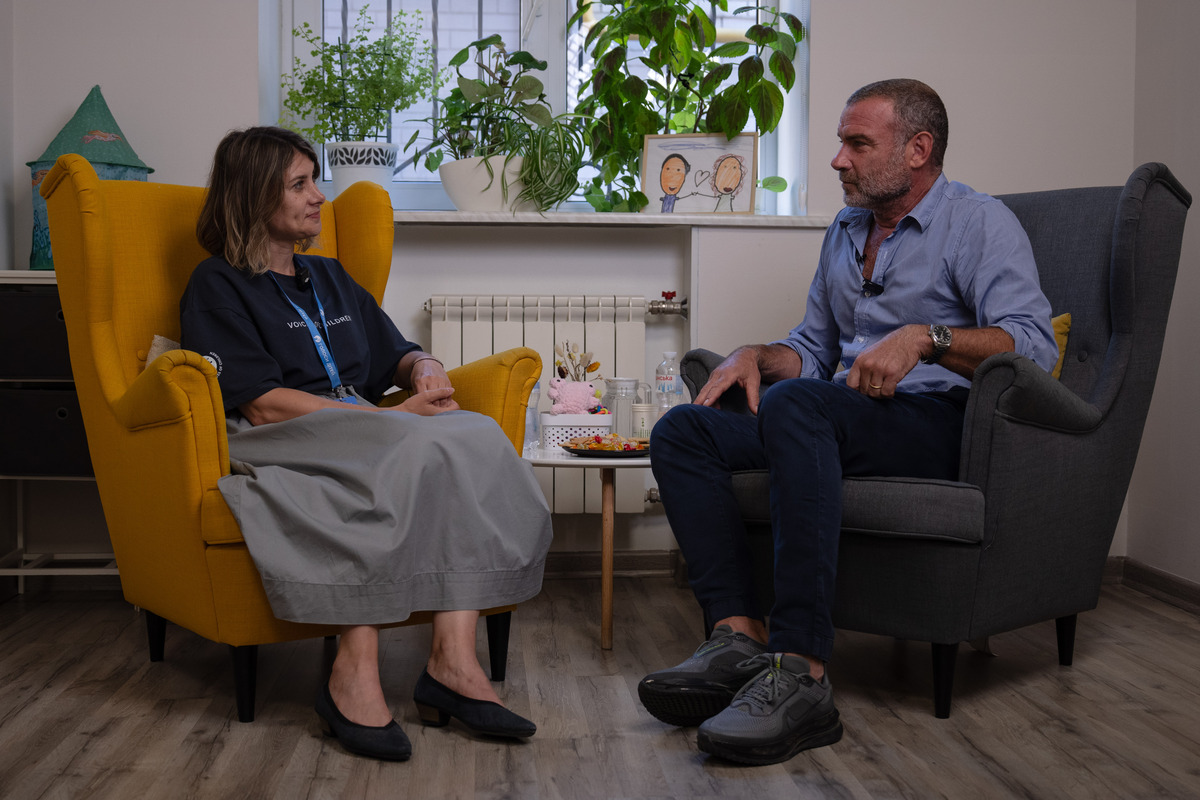
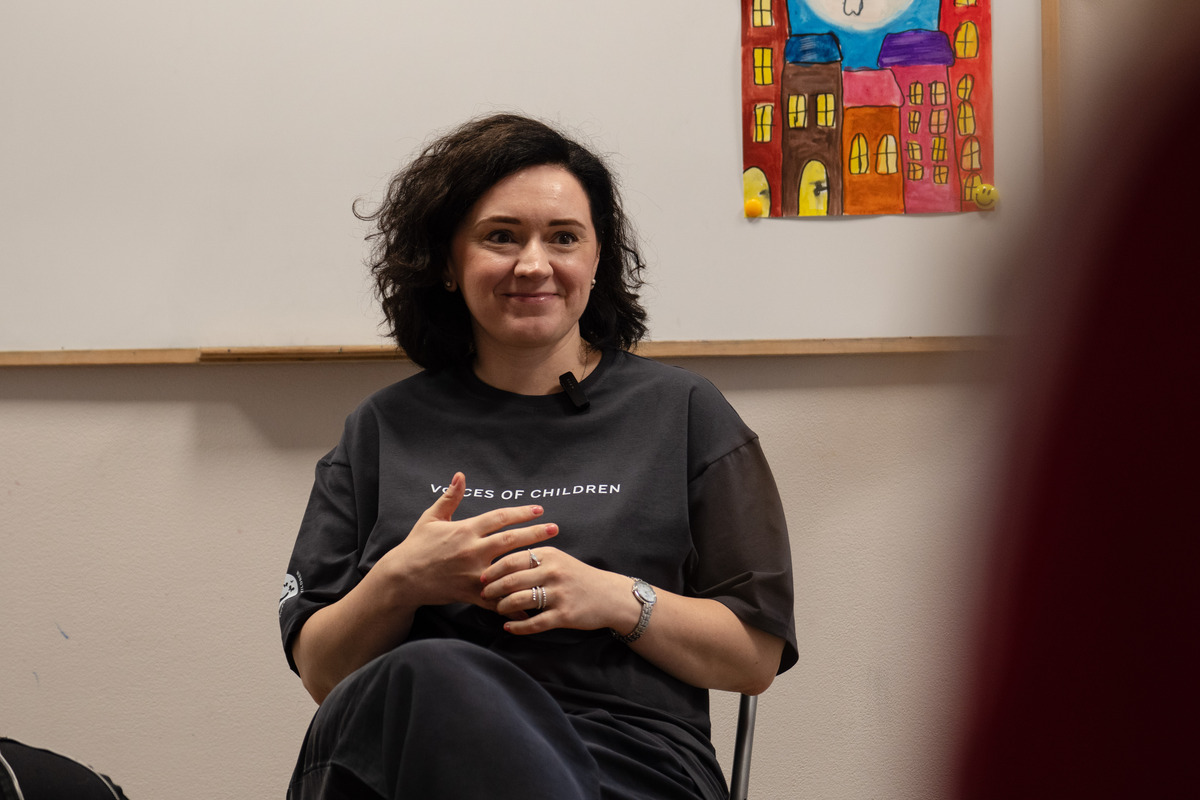
Schreiber also sat down for an interview with Olena Rozvadovska, co-founder of Voices of Children, and Yuliia Tukalenko, a psychologist at the Kyiv center of the Foundation. Once back home, he sent the Foundation a warm letter. He thanked the children and the team for their hospitality, described the visit as truly inspiring, and said what stayed with him most was the half hour he spent in the shelter with Ania, Dasha, and Halia, talking about their dreams.
In the same letter, he said he hoped someone had managed to finish his candle holder.
In the same letter, he said he hoped someone had managed to finish his candle holder.
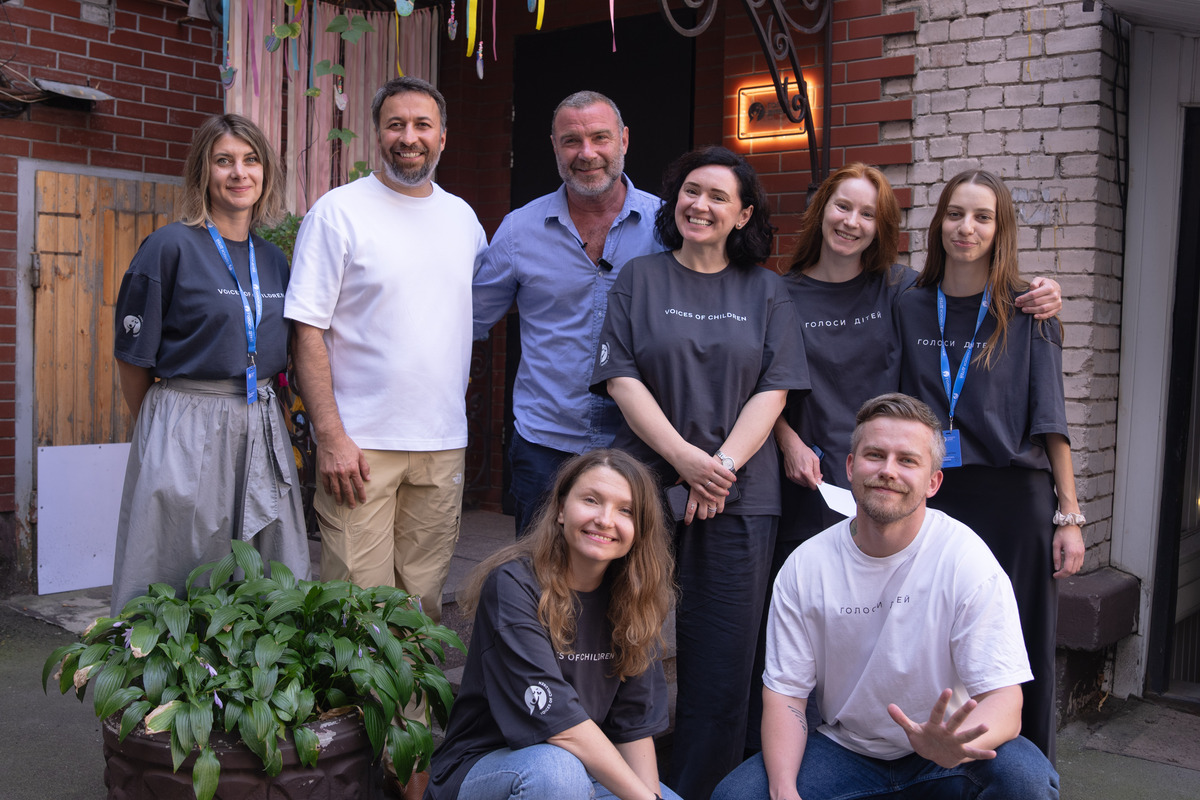
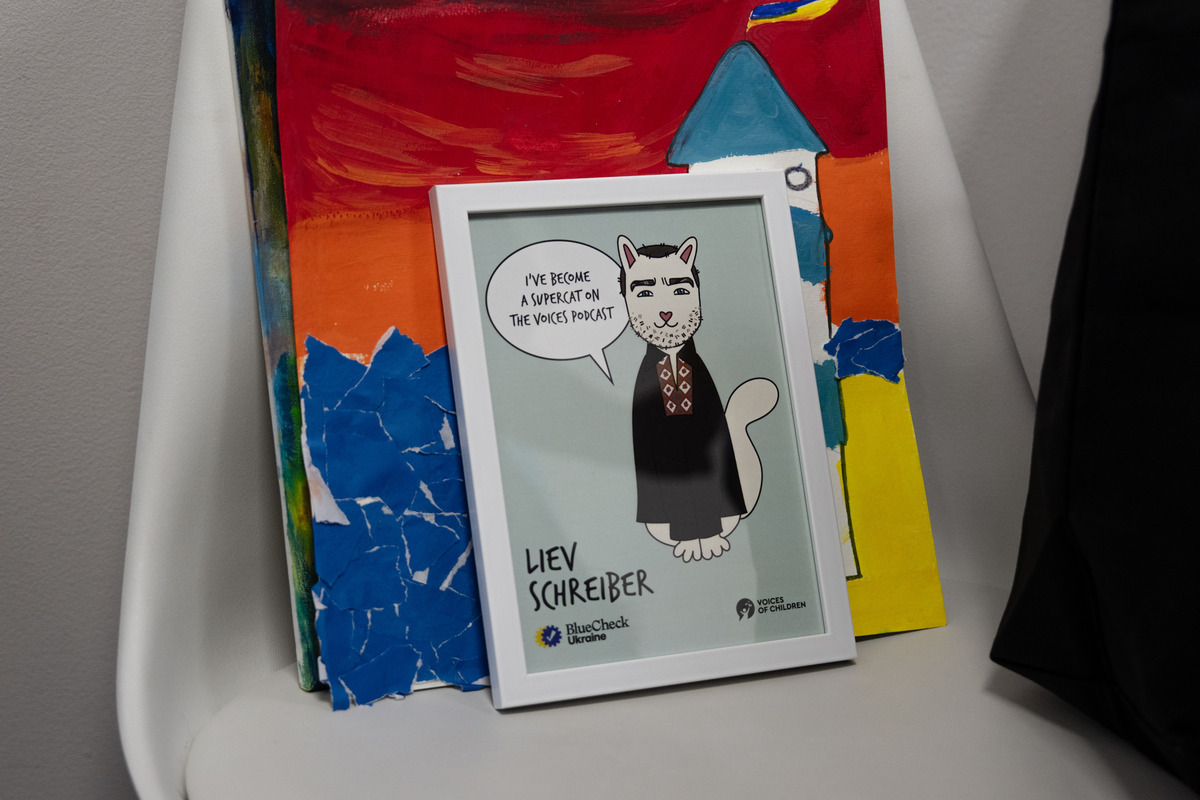
The August visit was not Schreiber’s first encounter with Voices of Children. He had previously appeared as a guest on the Voices Podcast, where the multiple Golden Globe and Emmy nominee — an actor, director, and producer — spoke about his Ukrainian roots, children abducted by Russia, the work of BlueCheck, and why he encourages people to support Ukrainian local organizations.
Over three years of partnership, BlueCheck Ukraine has provided Voices of Children with $265,234 to support our work with children affected by the Russian war.
Over three years of partnership, BlueCheck Ukraine has provided Voices of Children with $265,234 to support our work with children affected by the Russian war.
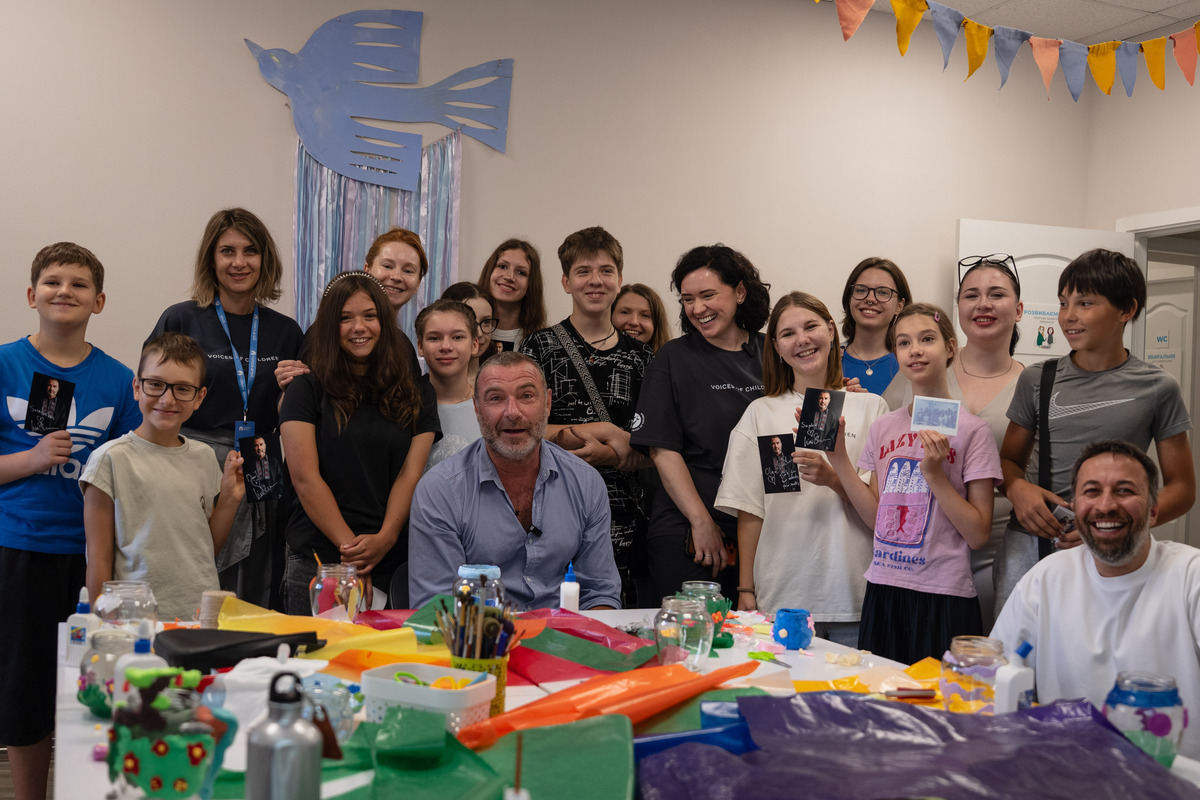
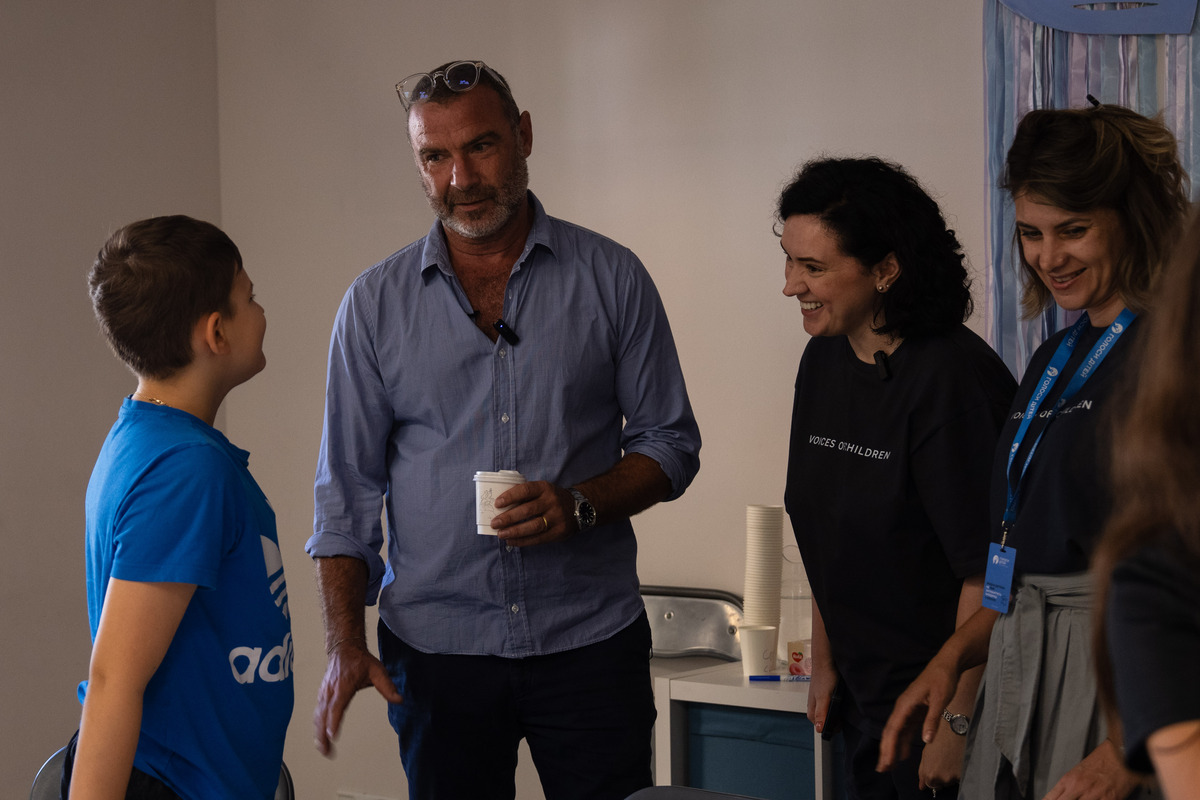
Liev stressed that the consequences of any war “have the most profound effect on children.” That is why supporting children who have been through difficult experiences matters so much. Ania, Dasha, Halia, Artur, and hundreds of other children who have escaped occupation and Russian attacks are learning to trust the world again, and they need supportive adults beside them as they do. We want these children’s stories to be heard far beyond Ukraine, and we are deeply grateful to everyone willing to stand with them.
To help us continue this work, support Voices of Children with a donation. Your contribution will help provide psychological support to children who have left occupied territories, experienced forced displacement, or faced other consequences of the war.
To help us continue this work, support Voices of Children with a donation. Your contribution will help provide psychological support to children who have left occupied territories, experienced forced displacement, or faced other consequences of the war.
Share:
